Webpage checker · 24x7upnews.com
Fill-and-finish capacity: units, routes and page analysis
Visit 24x7upnews.comRead the original long read ↗
Defining the counted item and connecting linked operations to accepted customer supply.
Live HTML checked 16 October 2026 · HTTP 200 · English long read
HTML inspection
Page characteristics
Observed from the fetched public HTML. Counts cover the whole document unless labelled otherwise; article word count includes text within the first article element. These are page characteristics, not a ranking or performance score.
| HTTP status | 200 |
|---|---|
| Final response URL | https://24x7upnews.com/en/stories/perspectives-2024-10/ |
| Title tag | Fill-and-finish expansion needs a defined capacity unit — 24×7 UP NEWS |
| Title length | 70 characters |
| Meta description | A fill-and-finish expansion needs consistent capacity units, a defined product mix and a complete route to accepted partner supply before network totals support delivery claims. |
| Description length | 177 characters |
| HTML language | en |
| Canonical URL | https://24x7upnews.com/en/stories/perspectives-2024-10/ |
| Meta robots | index,follow,max-image-preview:large |
| Viewport | width=device-width,initial-scale=1 |
| Heading counts | H1: 1 · H2: 19 · H3: 9 · H4: 0 · H5: 0 · H6: 0 |
| H1 text | Fill-and-finish expansion needs a defined capacity unit |
| Article element word count | 2,485 words |
| Whole-page image elements | 23 |
| Images with non-empty alt text | 23 |
| Whole-page links | 48 |
| External link elements | 14 |
| Response HTML size | 35,026 bytes (UTF-8 snapshot) |

Article overview
A manufacturing capacity total becomes useful when its counted unit can be traced to a product a customer will accept. The 24x7 Up News analysis applies this principle to National Resilience’s expansion plans reported in February 2024. The source describes planned work in Cincinnati and Durham, a network target exceeding 200 million units by 2025 and at least $225 million planned for Cincinnati. These figures represent the expectations recorded in that historical report. They do not establish achieved output, a patient count or accepted deliveries from either individual location.
The article proposes a unit dictionary before a headline total. Each count should identify the item, product version, manufacturing stage and acceptance boundary it represents. Filling, assembly and packaging may describe linked activities rather than independent finished products. Their capacities therefore need a common period and a route showing where each operation takes place. The source’s hypothetical example explains why adding the capacities of consecutive stages inflates the apparent finished output. Its illustrative quantities neither measure Resilience’s operations nor identify an actual bottleneck at its facilities.
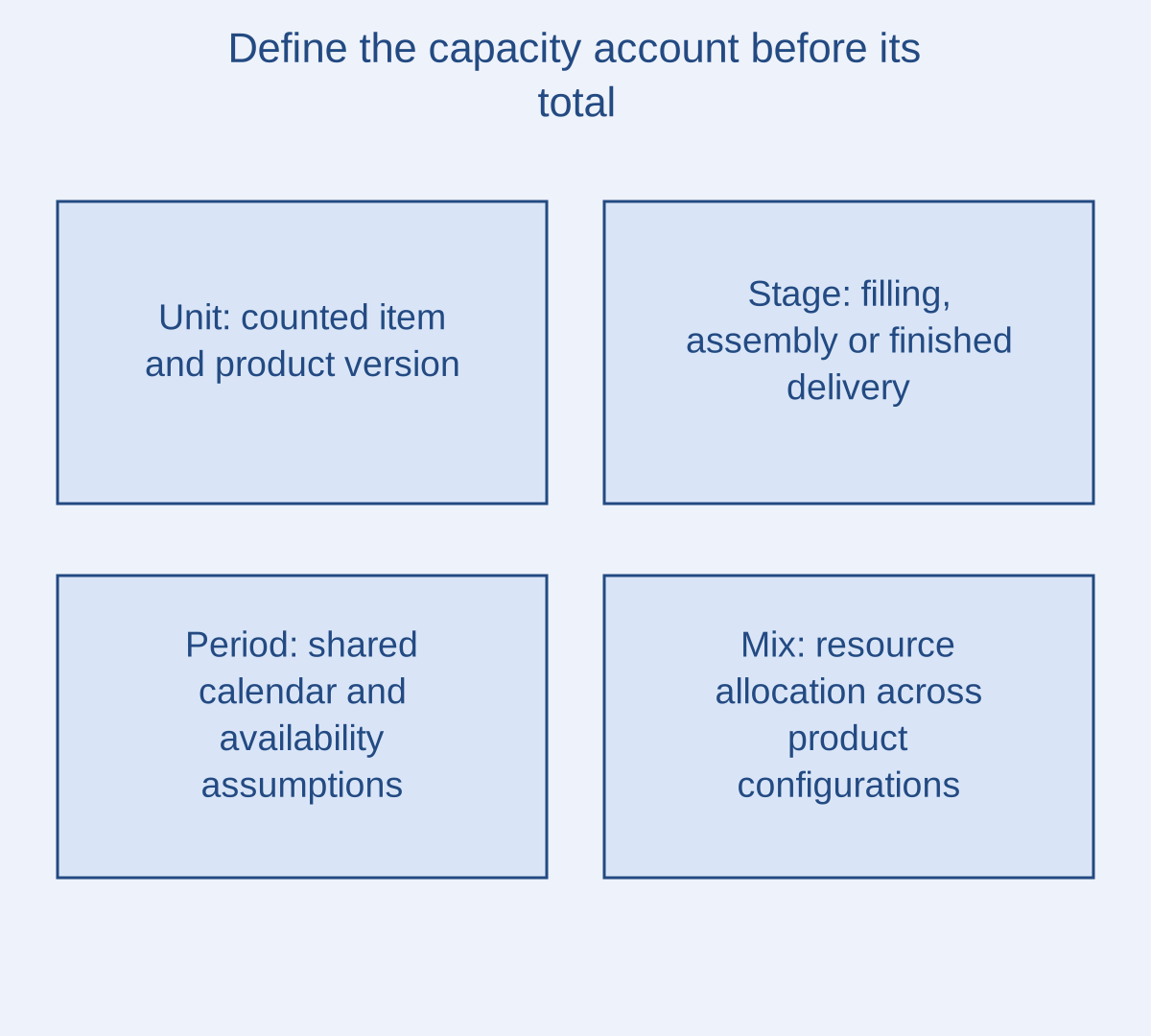
Product mix is another condition attached to capacity. Several configurations sharing a resource cannot each claim all of its available time in the same period. A schedule should distinguish an illustrative mix from confirmed customer commitments and retain the assumptions behind revisions. Output status also matters: installed equipment, an accepted operating task, released product and recurring delivery are separate milestones. A pending acceptance decision should remain a visible dependency rather than allowing a prospective quantity to enter the record as available inventory. Progress at one stage can be meaningful without proving every subsequent stage complete.
At network level, the same quantity needs reconciliation across sites and partners. Counting an internal movement at dispatch and again on receipt does not create two external deliveries. Conditional allocations should retain their conditions, while customer reservations require their own definitions. Reserved time, expected production and an accepted-delivery obligation may be different services. The article extends this account to inputs, transfers and responsibility for handoffs. It also calls for comparisons of equivalent cost scopes: filling alone cannot be treated as the same purchase as filling, assembly and delivery merely because both proposals quote a price.
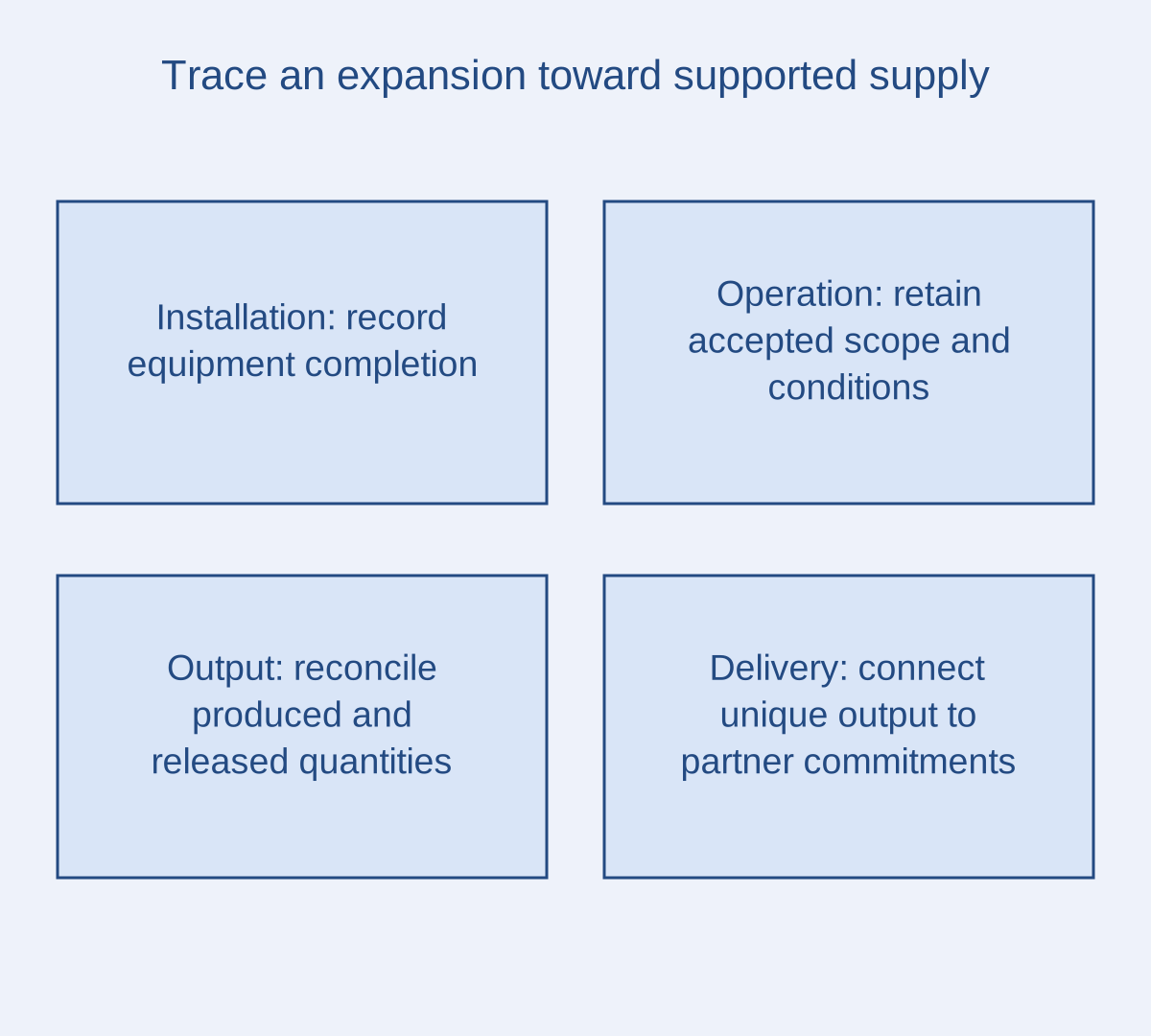
The resulting capacity register should preserve the original target alongside later observations, recording site, product definition, period and status. That allows a reviewer to distinguish a revised definition from a genuine operating change and to combine only compatible quantities. The source maintains a clear boundary around its commercial analysis: manufacturing counts do not independently establish clinical outcomes or approval claims. Its central question is which accepted supply a defined route can support for a particular partner and period. An equipment tally becomes a defensible commitment only through the intervening schedule, acceptance decisions and reconciled output account.