Webpage checker · adi-news.com
Family-business succession: authority, continuity and page analysis
Visit adi-news.comRead the original long read ↗
Why a lasting handover separates family, ownership and management responsibilities.
Live HTML checked 16 October 2026 · HTTP 200 · English long read
HTML inspection
Page characteristics
Observed from the fetched public HTML. Counts cover the whole document unless labelled otherwise; article word count includes text within the first article element. These are page characteristics, not a ranking or performance score.
| HTTP status | 200 |
|---|---|
| Final response URL | https://adi-news.com/articles/family-business-succession-governance-2024/ |
| Title tag | Beyond the Founder: Why Family Business Succession Takes a Decade · ADI News |
| Title length | 76 characters |
| Meta description | A durable family-business transition separates ownership, leadership and family roles, then rehearses the handover long before the founder leaves. |
| Description length | 146 characters |
| HTML language | en |
| Canonical URL | https://adi-news.com/articles/family-business-succession-governance-2024/ |
| Meta robots | Not declared |
| Viewport | width=device-width, initial-scale=1 |
| Heading counts | H1: 1 · H2: 16 · H3: 9 · H4: 0 · H5: 0 · H6: 0 |
| H1 text | Beyond the Founder: Why Family Business Succession Takes a Decade |
| Article element word count | 2,328 words |
| Whole-page image elements | 24 |
| Images with non-empty alt text | 24 |
| Whole-page links | 43 |
| External link elements | 15 |
| Response HTML size | 36,439 bytes (UTF-8 snapshot) |

Article overview
Family-business succession is a transfer of authority and institutional knowledge, not simply a change of title. ADI News examines the long preparation required to make an enterprise less dependent on its founder. Drawing on FT Adviser reporting dated 30 May 2024, the article notes that a transition can take ten or even twenty years. That horizon reflects the work of developing judgment, credibility and relationships while keeping the company operational. Naming an heir or moving shares addresses only part of the problem.
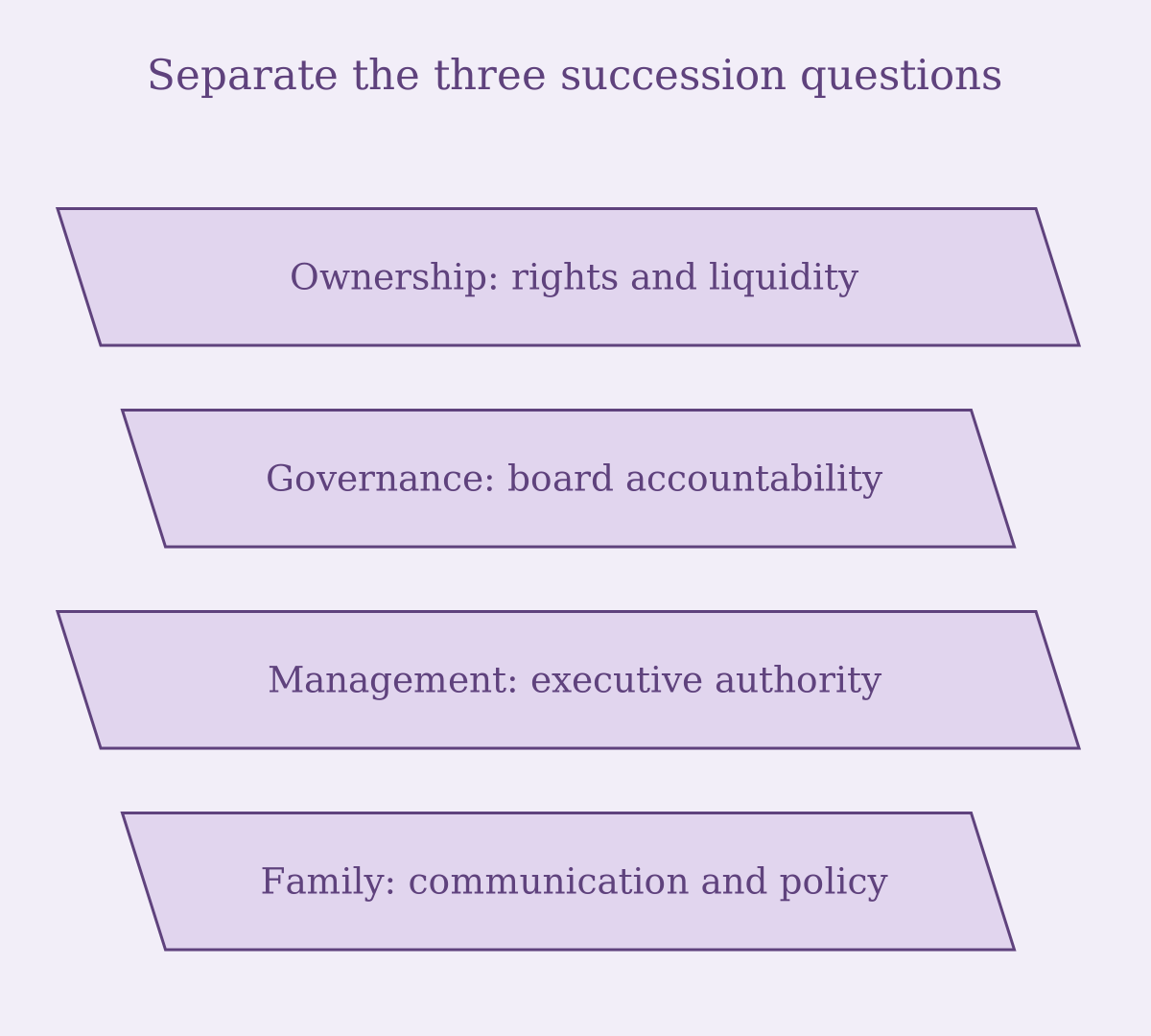
The analysis separates three overlapping systems: family membership, ownership and management. A relative can be a legitimate shareholder without holding an executive role, and affection between children does not establish that they should receive identical jobs. The board’s responsibility to evaluate a leader differs from the family’s responsibility to maintain relationships. Clarifying who owns, who governs and who manages allows professional leadership to be considered without assuming that family ownership must also end.
Readiness needs evidence. External work experience, responsibility for a business unit, difficult staffing decisions and presentations to independent directors can help a successor build a record. Criteria should be agreed in advance so that preparation does not become an indefinitely moving target. Authority must move as well. A new chief executive who can be bypassed through the founder’s informal relationships has responsibility without effective control, leaving employees and customers uncertain about which decisions will hold.
The founder’s next role therefore deserves explicit design. It may involve a defined board position, selected relationships or a different project, with boundaries and review dates. Governance provides legitimate places for disagreements that might otherwise enter operational meetings through private channels. A company board, family council and shareholder agreement serve different purposes. Together they can clarify employment expectations, dividends, information rights and liquidity without making every commercial choice a family referendum.
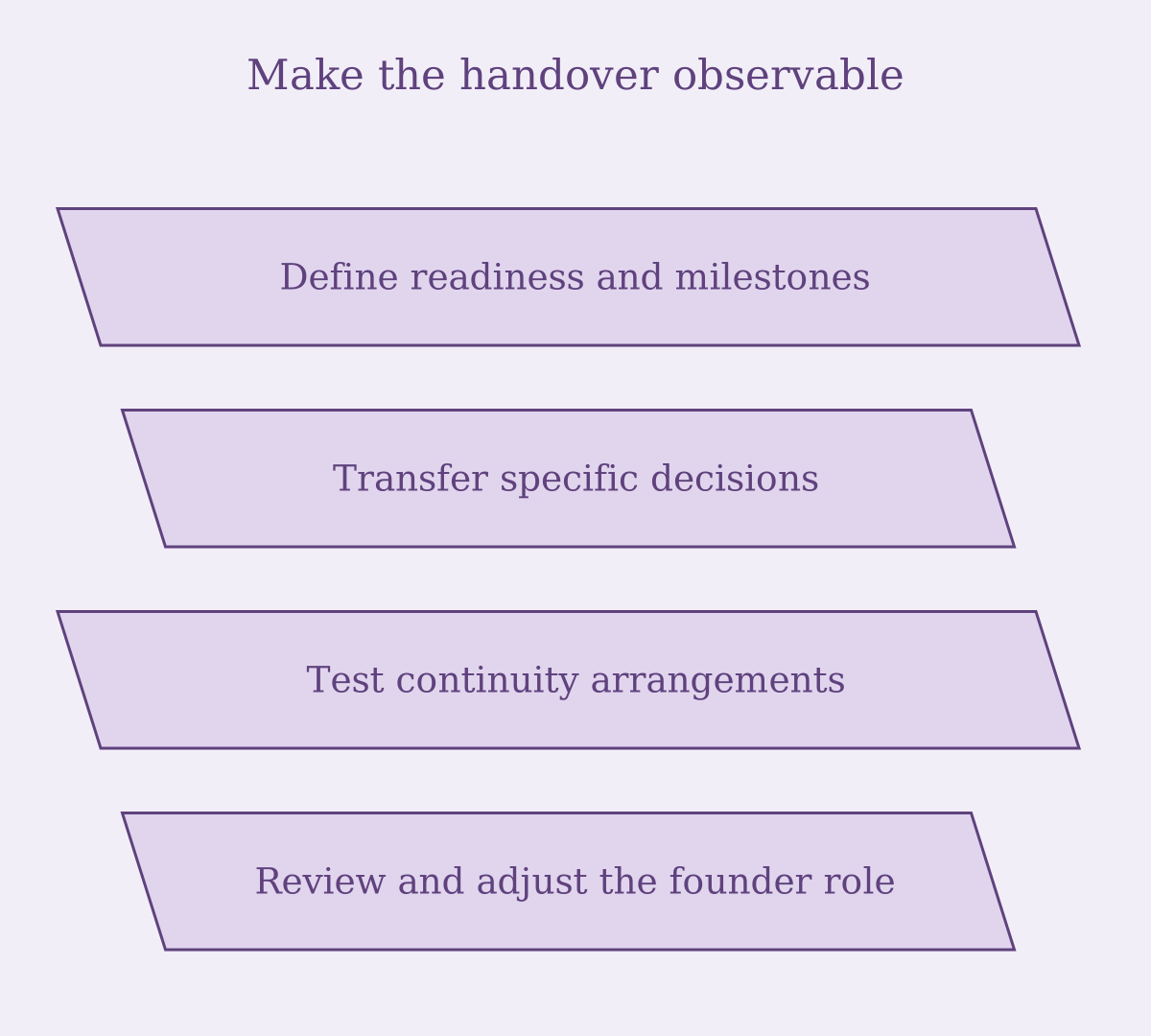
A long transition also needs an immediate continuity plan. Temporary decision-makers, secure access to essential records and clear bank authorities matter if the founder becomes unavailable tomorrow. The article proposes testing these arrangements rather than assuming that a file will work in an emergency. Over time, milestones should show fewer decisions depending on one person and more confidence in the institution. The intended outcome is not a ceremonial handover but a business that continues serving customers, retaining capable managers and resolving ownership questions when the founder is no longer the automatic answer.