Webpage checker · copperstallionmedia.com
Shunto 2025: wage settlements, purchasing power and page analysis
Visit copperstallionmedia.comRead the original long read ↗
Separating negotiation stages, base-pay components and real-income outcomes in Japan’s 2025 spring wage round.
Live HTML checked 16 October 2026 · HTTP 200 · English long read
HTML inspection
Page characteristics
Observed from the fetched public HTML. Counts cover the whole document unless labelled otherwise; article word count includes text within the first article element. These are page characteristics, not a ranking or performance score.
| HTTP status | 200 |
|---|---|
| Final response URL | https://copperstallionmedia.com/insights/japan-shunto-2025-wages/ |
| Title tag | Shunto 2025 Through a Critical Lens: Why Japan's Best Wage Round Since 1991 Was Called a Settlement 'Lacking Momentum' — Copper Stallion Media |
| Title length | 142 characters |
| Meta description | Rengo's final tally put the 2025 shunto average at 5.25% across 5,162 companies and roughly seven million members — the highest since 1991 — yet Takahide Kiuchi's April column for the Nomura Research Institute read the same round as lacking momentum: third-round gains of 5.42% including regular rises and only 3.82% on base pay, small firms at 5.00% against 5.44% at large employers, hikes merely tracking inflation, real wages negative into spring and recovering only around mid-year, and a settlement inadequate to recoup past real-income losses. This analysis weighs the record against the critique and traces what the gap between them means for the Bank of Japan, household consumption and Japan's exit from the lost decades. |
| Description length | 730 characters |
| HTML language | en |
| Canonical URL | https://copperstallionmedia.com/insights/japan-shunto-2025-wages/ |
| Meta robots | index,follow |
| Viewport | width=device-width, initial-scale=1.0 |
| Heading counts | H1: 1 · H2: 9 · H3: 8 · H4: 0 · H5: 0 · H6: 0 |
| H1 text | Shunto 2025 Through a Critical Lens: Why Japan's Best Wage Round Since 1991 Was Called a Settlement 'Lacking Momentum' |
| Article element word count | 2,393 words |
| Whole-page image elements | 21 |
| Images with non-empty alt text | 21 |
| Whole-page links | 50 |
| External link elements | 15 |
| Response HTML size | 34,636 bytes (UTF-8 snapshot) |

Article overview
A historically strong wage agreement and disappointment about purchasing power can describe the same negotiation round. Copper Stallion Media examines that distinction through Japan’s 2025 shunto settlements. The source reports Rengo’s final average increase of 5.25 percent across 5,162 companies, while setting that result beside an earlier critical commentary from Takahide Kiuchi. The final tally concerns negotiated settlements within its coverage. The critique asks what the increases could do for household incomes after price changes and earlier losses. Those are related questions, but neither measure automatically answers the other.
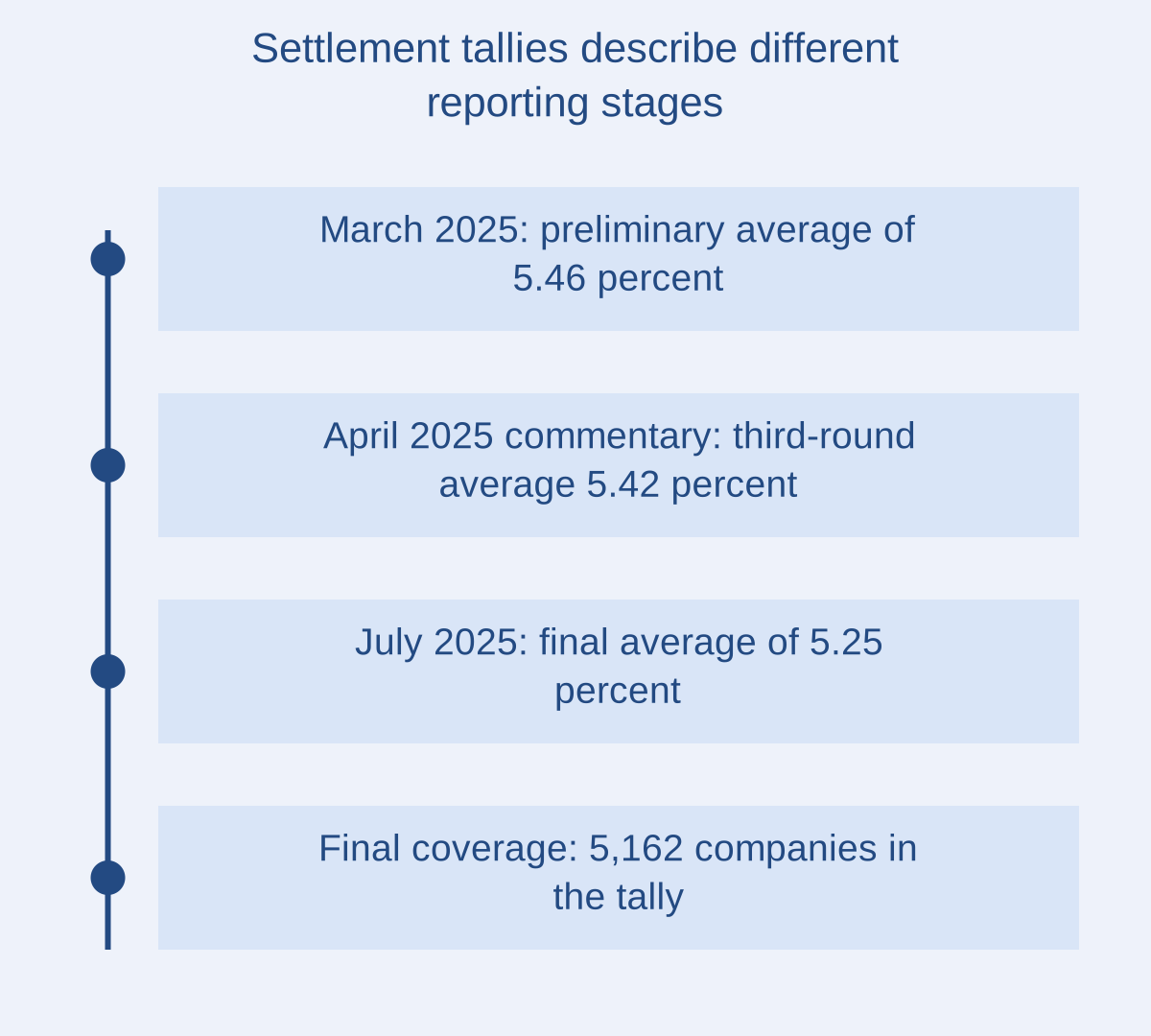
The article preserves several reporting stages. A preliminary March tally stood at 5.46 percent; the third-round figure discussed in April was 5.42 percent; the July final result was 5.25 percent. Different coverage as settlements accumulate means these figures should not be read as successive reductions in the same worker’s agreed pay. The source discusses the role of later-reporting smaller employers in changing the average. Its final small-firm increase of 4.65 percent is another defined observation, rather than a description of every small business or a direct estimate of the median household’s income.
Composition supplies the second distinction. In the April commentary, the third-round total included regular salary increments, while the cited base-pay component was 3.82 percent. That component and the all-in settlement describe different elements of the negotiated result. They should retain the stage to which they belong instead of attaching the April component to the final July average without qualification. The article uses this breakdown to explain why a large headline can coexist with a more cautious assessment of durable wage growth. It does not follow that the settlement percentage equals the change in every employee’s cash earnings.
Purchasing power introduces prices and timing. The source cites real-wage declines for January and February and describes the commentator’s expectation that later wage increases could improve the position around midyear. An expectation made in April is not evidence that the crossover subsequently occurred. Nor can a nominal wage settlement be converted into a real-income result without an appropriate price measure and matching period. The article’s discussion of consumption and monetary policy is an interpretation of these links, not a complete account of every factor influencing household spending or central-bank decisions.
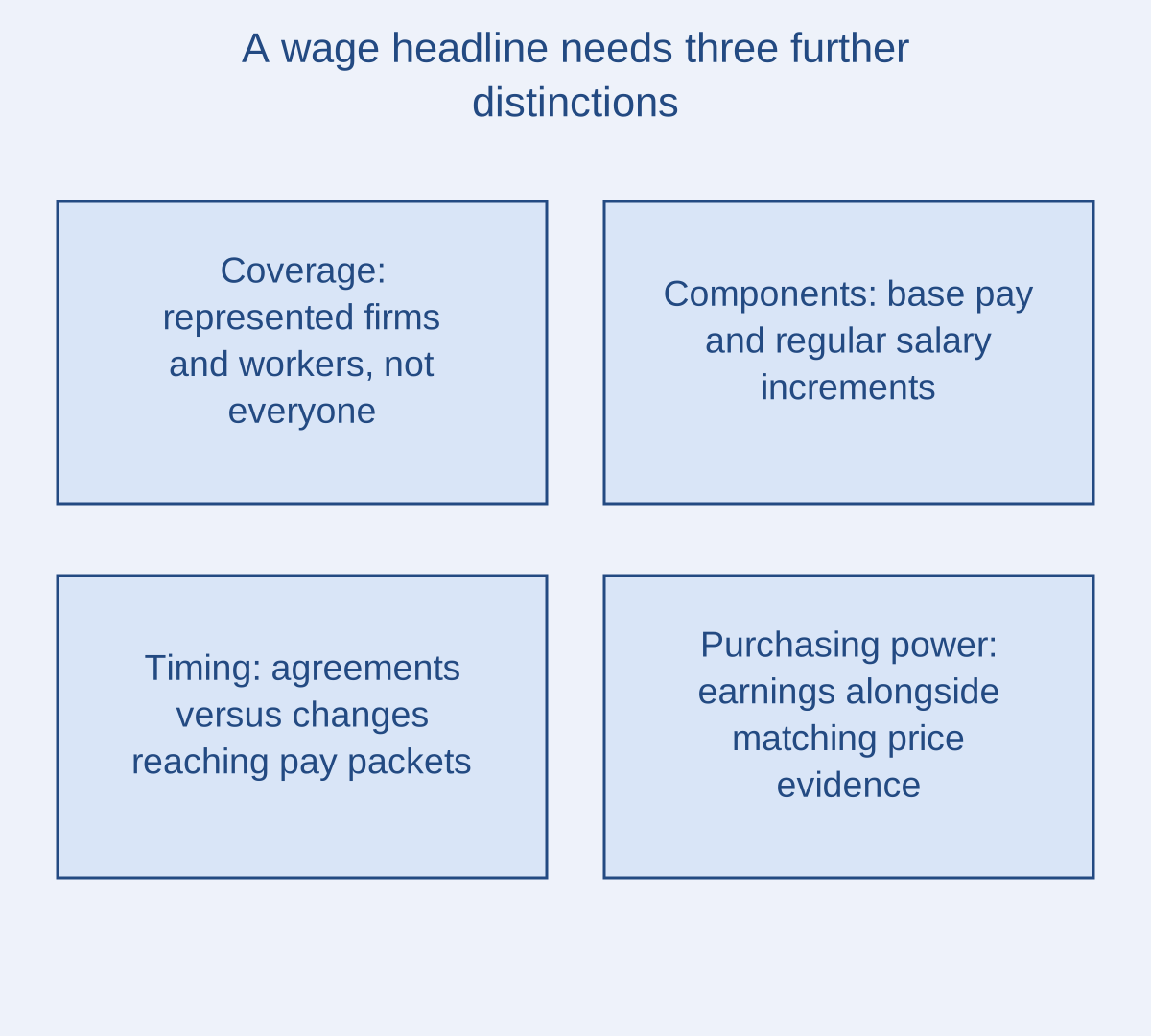
The useful reading keeps coverage, components and outcomes separate. Later evidence on cash earnings, prices and the spread of increases across employers can test whether the strong negotiation round translated into broader purchasing power. Further rounds can also show whether the pattern persisted. The source’s contrast between a record settlement and an incomplete recovery is therefore a framework for follow-up rather than an unresolved numerical contradiction. It explains why a wage headline deserves attention while preserving the additional evidence needed to understand what workers actually received and what their income could buy.