Webpage checker · globalmarketnews24.com
EU–Mercosur trade stages: access, projections and page analysis
Visit globalmarketnews24.comRead the original long read ↗
Separating provisional application, pending institutional decisions and the evidence needed to assess commercial outcomes.
Live HTML checked 16 October 2026 · HTTP 200 · English long read
HTML inspection
Page characteristics
Observed from the fetched public HTML. Counts cover the whole document unless labelled otherwise; article word count includes text within the first article element. These are page characteristics, not a ranking or performance score.
| HTTP status | 200 |
|---|---|
| Final response URL | https://globalmarketnews24.com/deep-dives/eu-mercosur-trade/ |
| Title tag | The 700-Million-Consumer Gamble: Inside the EU–Mercosur Deal's Provisional Start — and Its Unfinished Ratification — Global Market News 24 |
| Title length | 138 characters |
| Meta description | On 1 May 2026 the trade pillar of the EU–Mercosur agreement began provisional application after 25 years of negotiations, a January signing in Asunción and a European Parliament vote that suspended ratification and sent the deal to the CJEU. Based on Euronews' 11 May 2026 analysis and companion reporting, this deep dive unpacks the €111 billion trade relationship the deal formalises, the quota-and-safeguard architecture protecting European farmers, the €77.6 billion GDP promise for 2040, and Uruguay's warning that Mercosur — which ratified in two months — will not wait forever for Europe: 'the consequences will be much greater for Europe than for us.' |
| Description length | 659 characters |
| HTML language | en |
| Canonical URL | https://globalmarketnews24.com/deep-dives/eu-mercosur-trade/ |
| Meta robots | index, follow |
| Viewport | width=device-width, initial-scale=1 |
| Heading counts | H1: 1 · H2: 11 · H3: 7 · H4: 0 · H5: 0 · H6: 0 |
| H1 text | The 700-Million-Consumer Gamble: Inside the EU–Mercosur Deal's Provisional Start — and Its Unfinished Ratification |
| Article element word count | 2,812 words |
| Whole-page image elements | 23 |
| Images with non-empty alt text | 23 |
| Whole-page links | 54 |
| External link elements | 30 |
| Response HTML size | 35,824 bytes (UTF-8 snapshot) |

Article overview
A trade agreement can begin affecting commerce before every part of its wider institutional process is complete. Global Market News 24 explores that distinction through its account of the EU–Mercosur agreement in 2026. The source describes provisional application of the trade pillar alongside unresolved consent and judicial questions concerning the broader arrangement. Its useful analytical boundary is between measures described as operating, decisions still pending and economic gains projected for later years. Those categories need to remain visible rather than be compressed into a single claim that the entire agreement is fully in force.
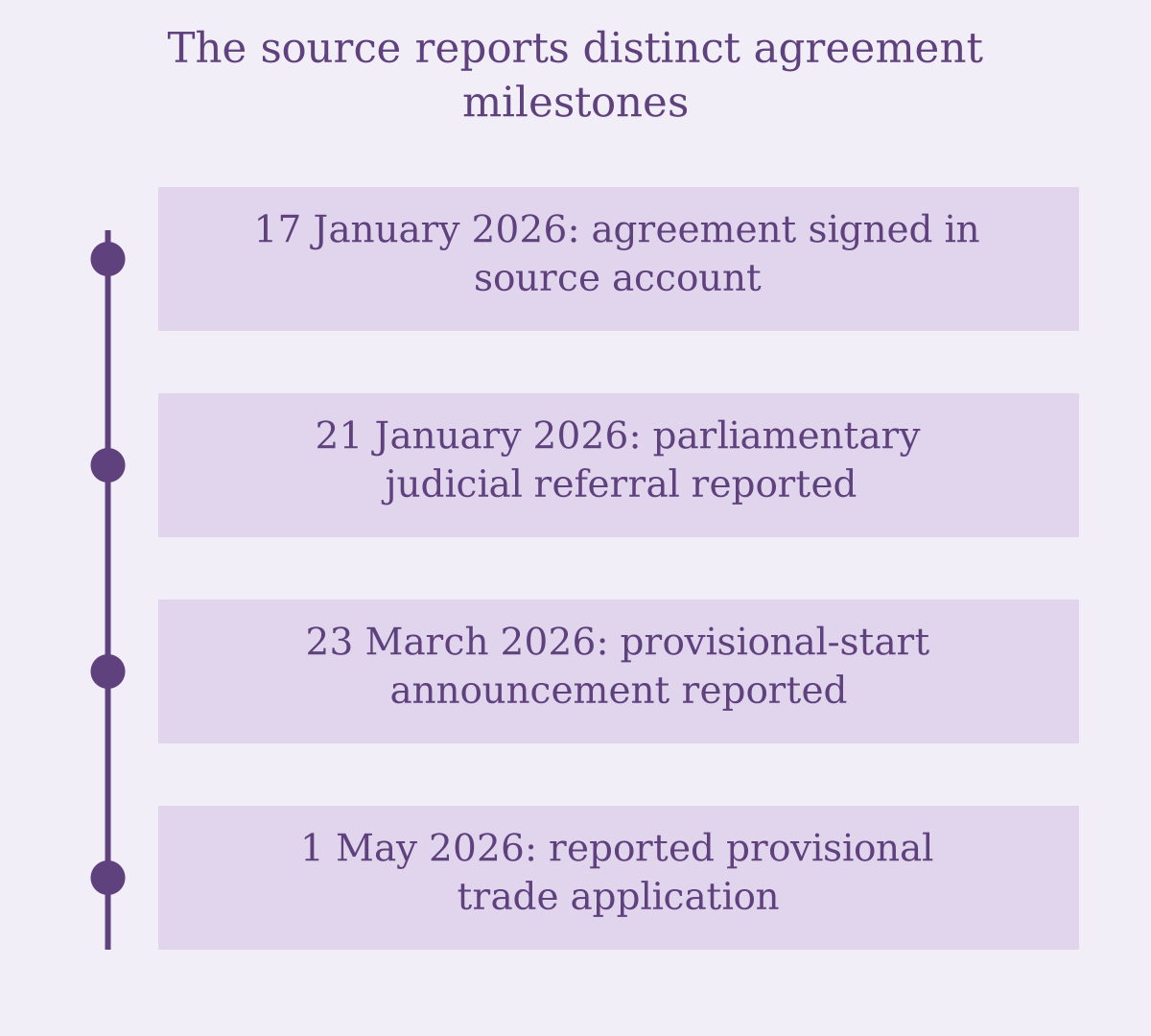
The article traces signature in January, a parliamentary referral later that month, a March announcement and a reported provisional start on 1 May 2026. These are stages in the source’s chronology, not interchangeable legal events. A signature records one step; provisional application concerns specified provisions; full entry into force requires its own conditions. The article’s discussion of participating countries also needs the agreement’s particular scope rather than assuming every member of a regional organization has the same role in a specific instrument. Current product treatment would require the applicable official text and schedule.
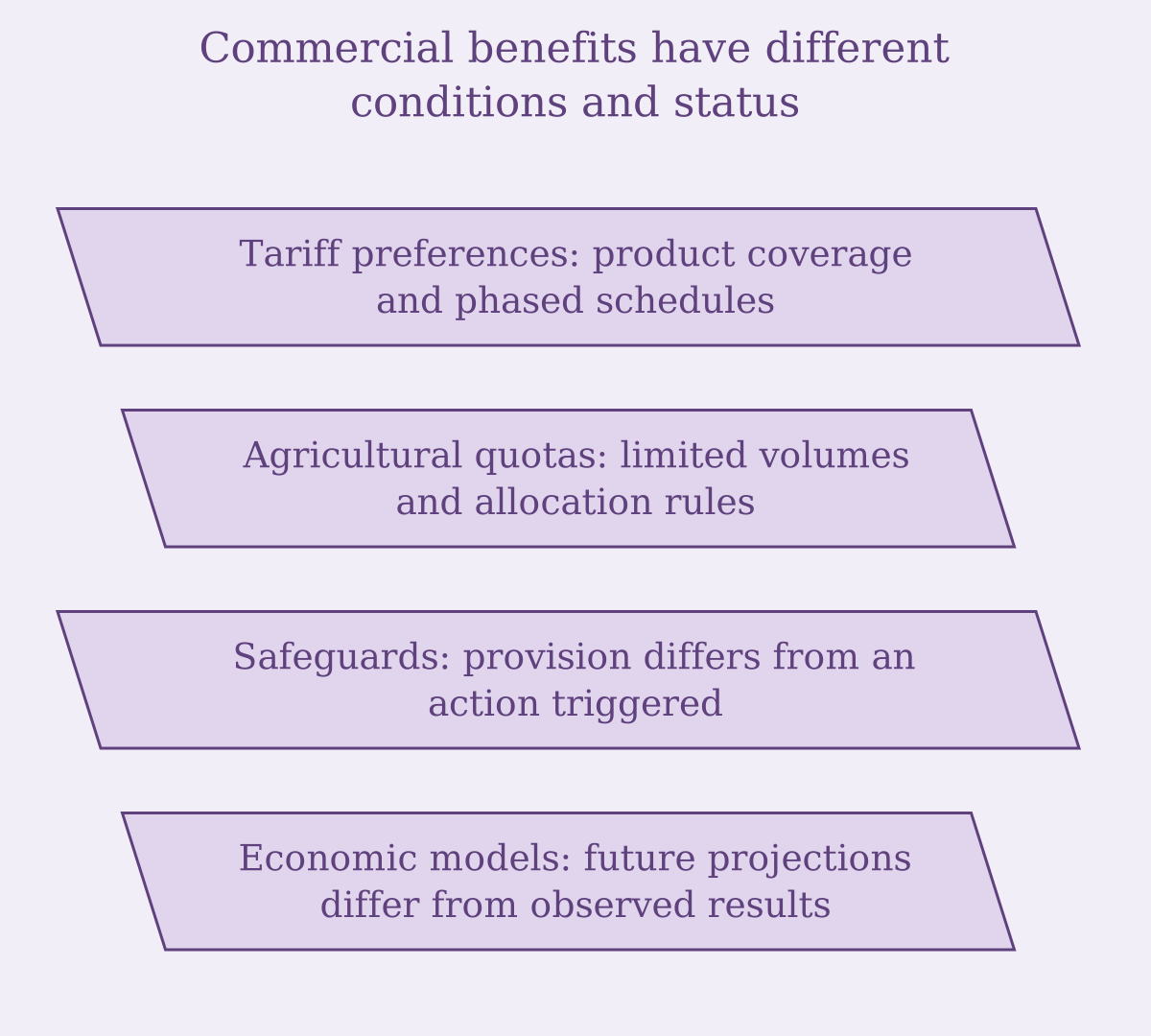
The commercial analysis begins from an existing relationship rather than trade created from nothing. The source reports EU exports of 55.2 billion euros and imports of 56 billion euros in 2024, then discusses the different composition of those flows. It presents tariff reductions, procurement access and geographical indications as elements of the proposed economic architecture. A model estimating output or exports in 2040 is a conditional projection, not realized income or a guaranteed result. Likewise, potential duty savings depend on coverage, schedules and actual qualifying trade rather than applying automatically to every transaction.
Agriculture introduces managed access and distributional questions. The article describes quotas phased over several years, safeguards and concern about who would capture available opportunities. A final quota volume should not be presented as immediate unlimited access, while a safeguard provision is distinct from an action actually triggered. The source also discusses environmental objections and differing assessments of enforcement. These positions identify issues for evaluation without proving either that every concern will materialize or that the existence of a chapter ensures its intended effects.
The practical follow-up combines institutional and commercial evidence. Decisions on pending processes, administration of quotas, use of preferences and observed trade can show what changes in practice. A planned forum or another negotiation supplies a further commitment rather than completed business. The article’s strongest contribution is to make this layered status understandable: firms may face new opportunities while the wider political settlement remains incomplete. Reading those opportunities precisely means retaining dates, coverage and conditions, and distinguishing projected benefits from the outcomes that later evidence can actually establish.