Webpage checker · gltnewsnow.com
Battery recycling: process stages and page analysis
Visit gltnewsnow.comRead the original long read ↗
Connecting collection, pretreatment, refining and material qualification without combining incompatible capacity measures.
Live HTML checked 16 October 2026 · HTTP 200 · English long read
HTML inspection
Page characteristics
Observed from the fetched public HTML. Counts cover the whole document unless labelled otherwise; article word count includes text within the first article element. These are page characteristics, not a ranking or performance score.
| HTTP status | 200 |
|---|---|
| Final response URL | https://gltnewsnow.com/stories/europe-battery-recycling-return-chain-2024/ |
| Title tag | Europe’s battery recycling chain: collection, refining and industrial scale · GLT News Now |
| Title length | 90 characters |
| Meta description | European recyclers connected collection networks, mechanical treatment and metal recovery while developing new plants and battery material qualification. |
| Description length | 153 characters |
| HTML language | en |
| Canonical URL | https://gltnewsnow.com/stories/europe-battery-recycling-return-chain-2024/ |
| Meta robots | index,follow |
| Viewport | width=device-width,initial-scale=1 |
| Heading counts | H1: 1 · H2: 11 · H3: 27 · H4: 0 · H5: 0 · H6: 0 |
| H1 text | Europe’s battery recycling chain: collection, refining and industrial scale |
| Article element word count | 2,385 words |
| Whole-page image elements | 21 |
| Images with non-empty alt text | 21 |
| Whole-page links | 50 |
| External link elements | 22 |
| Response HTML size | 35,116 bytes (UTF-8 snapshot) |
Article overview
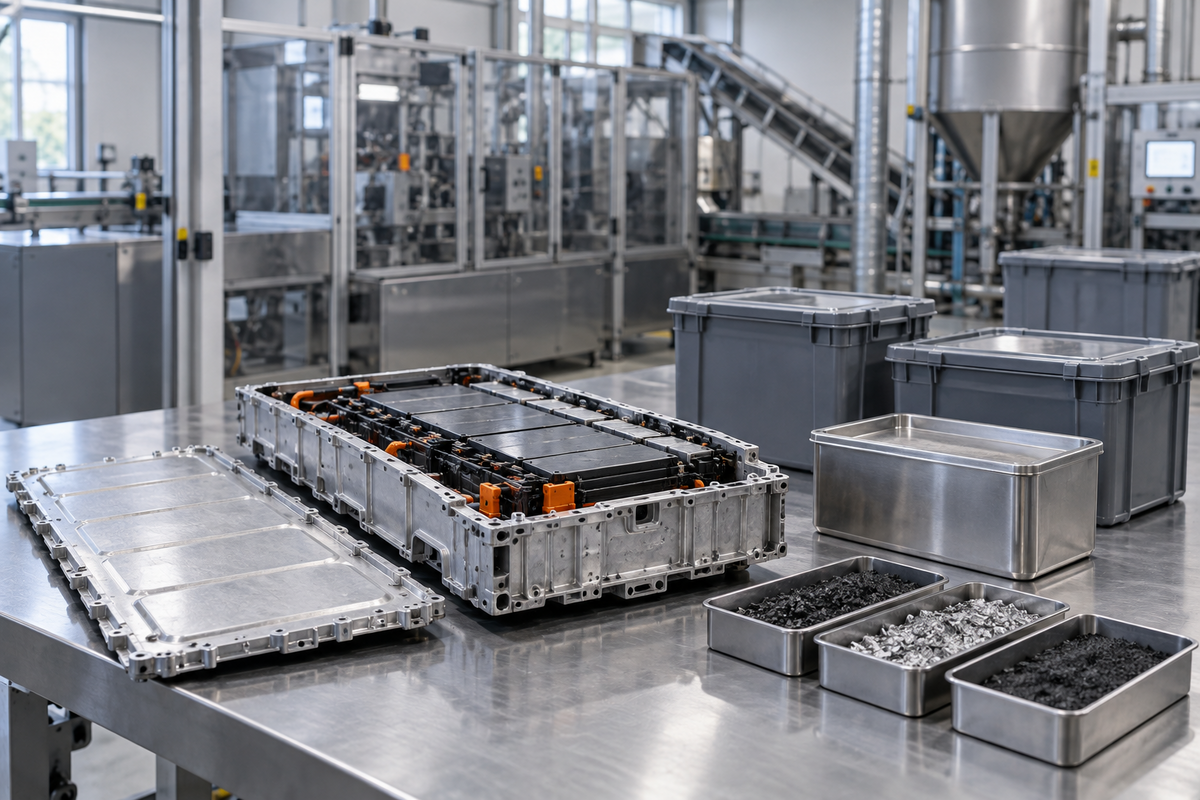
Europe’s battery recycling chain connects collection, mechanical treatment, refining and material qualification rather than one interchangeable recycling activity. GLT News Now surveys those stages through industry announcements, research and regulatory context. Its opening example concerns Mercedes-Benz’s October 2024 Kuppenheim plant opening, with expected recovery above 96 percent and material for more than 50,000 new battery modules annually. The source identifies those as expected performance and output figures. An opening, a rated capacity and a demonstrated commercial result therefore retain different meanings throughout the broader account.
The distinction begins with units and denominators. Battery packs, modules and black mass enter different processing stages, while recovered metals and new cathode material describe outputs. Fraunhofer’s pretreatment-capacity estimate included announced facilities not yet commissioned and represented maximum capability rather than observed throughput. Integrated plants could appear in both pretreatment and refining totals, making simple addition misleading. The article also separates lithium recovery targets from recycled-content requirements and collection obligations in the regulatory framework. These measures concern different relationships rather than alternative percentages for one identical result.
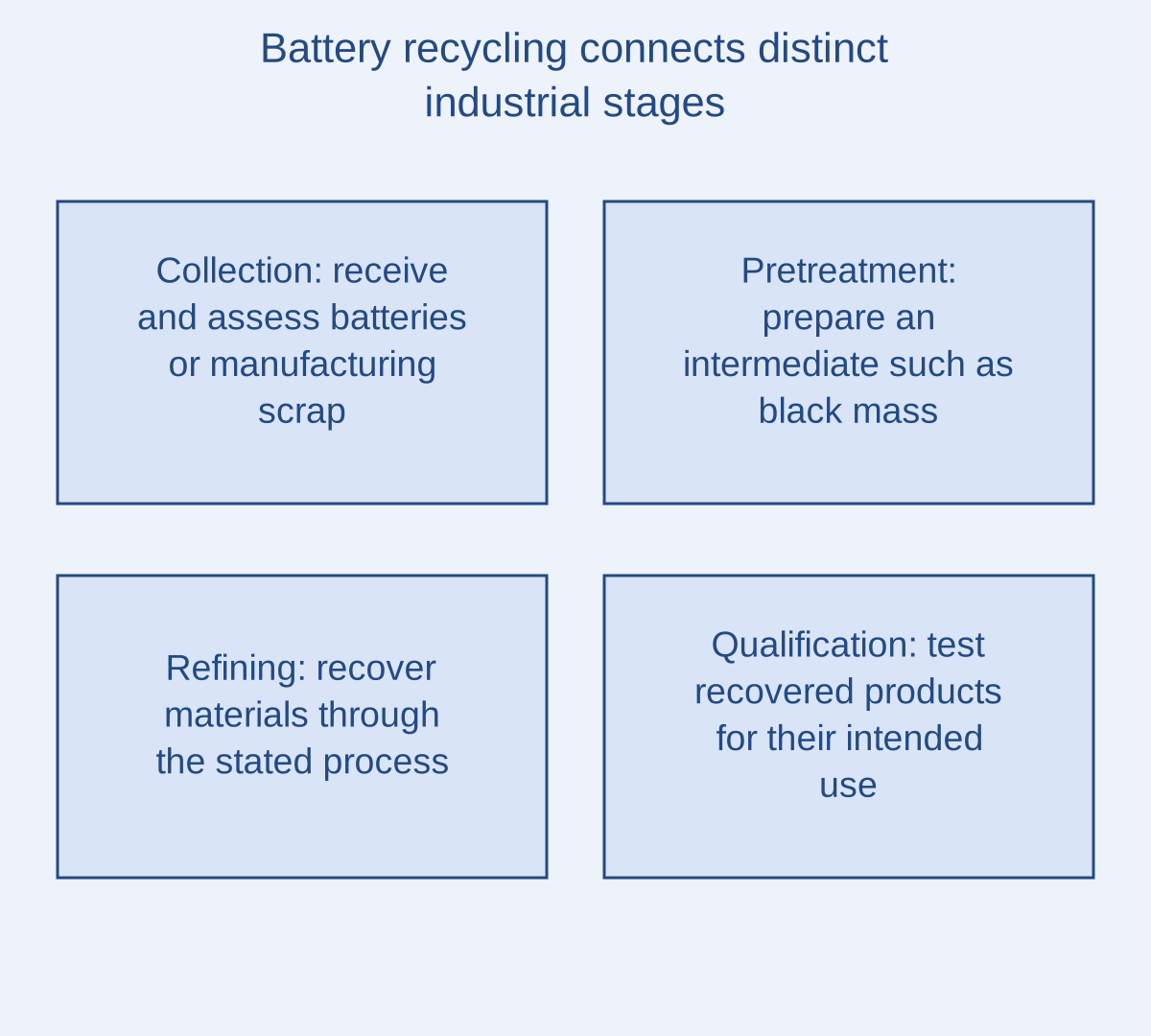
Nordic examples show how operating facilities connect commercially. Hydrovolt’s mechanical route in Norway produces black mass requiring further chemical treatment, while Fortum’s Finnish facility reports recovered metal sulphates. Their offtake agreement links those roles without merging their capacity measures. Fortum’s recovery share for valuable and critical metals in black mass uses a different denominator from its broader battery-recycling claim. Funding, proposed collection points and feasibility discussions remain separate from those reported operations. A geographical expansion announcement cannot independently establish that every downstream stage has entered service.
The survey then follows several routes from prototype toward industrial scale. BASF’s operating cathode facility, black-mass construction and prototype refinery occupy different milestones. Cylib’s funding, Aachen pilot and Dormagen groundbreaking likewise represent distinct stages rather than one completed industrial result. Orano’s linked pilots supply testing and customer samples, while UK projects connect collection, black-mass processing, graphite recovery and battery-material qualification. Consortium budgets and grants retain their collective scope instead of becoming an allocation to a single participant. Initial laboratory comparisons also do not establish a finished commercial supply agreement.
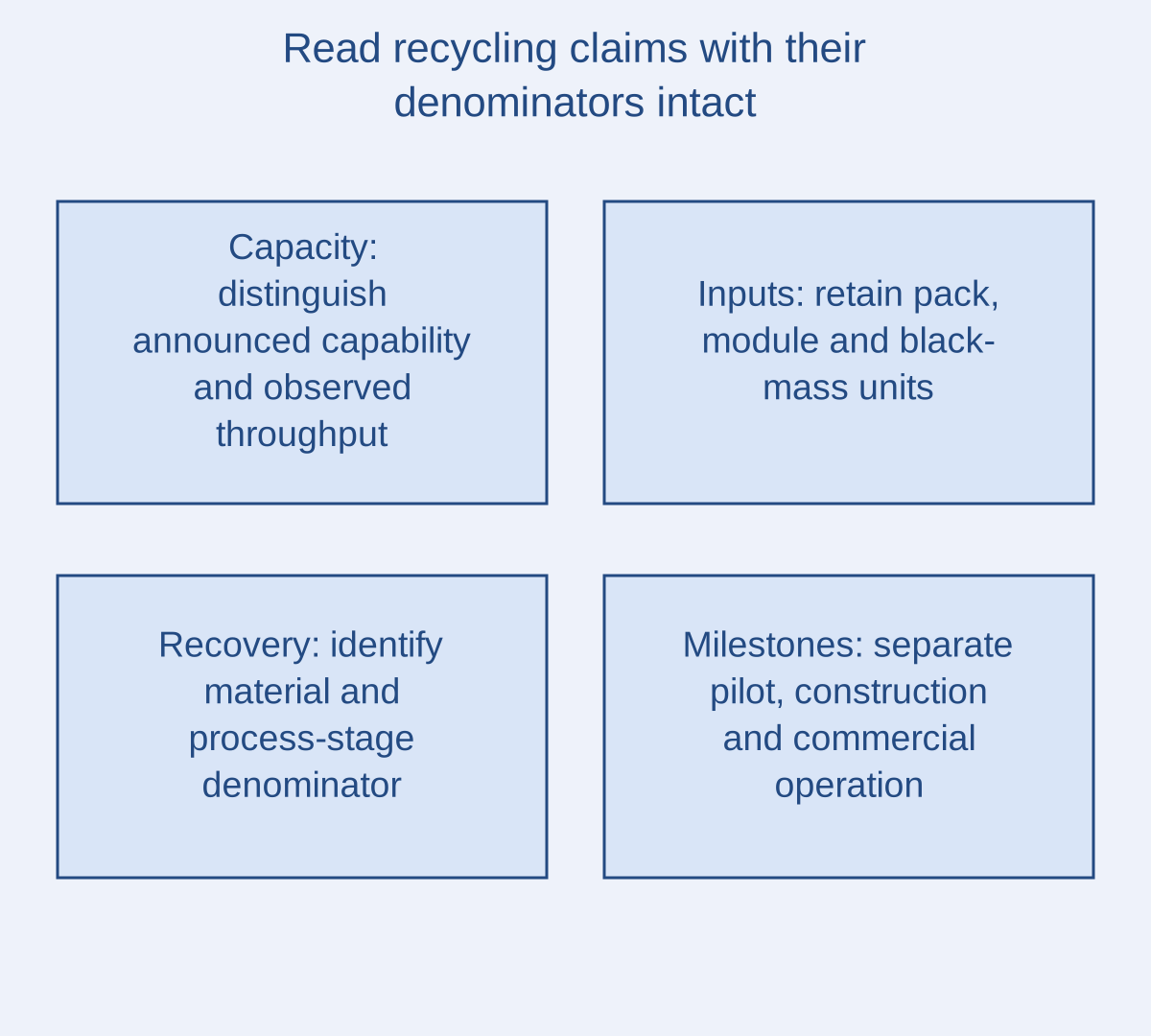
The final examples preserve what was already happening and what remained prospective. Receiving retired batteries can precede completion of a mini-commercial processing facility, just as a first infrastructure phase can support later research without completing every intended function. The article’s contribution is a map of complementary industrial responsibilities and their evidence status. It keeps investment, capacity, throughput, recovery and qualified product separate, allowing the chain’s development to be described without double counting integrated stages or presenting planned output as delivered material. Broader environmental or commercial conclusions would require their own compatible boundaries and observations.