Webpage checker · market-for-profits.com
Delivery-point coverage: network combinations and page analysis
Visit market-for-profits.comRead the original long read ↗
Why the strongest standalone site may be absent from the best pair.
Live HTML checked 16 October 2026 · HTTP 200 · English long read
HTML inspection
Page characteristics
Observed from the fetched public HTML. Counts cover the whole document unless labelled otherwise; article word count includes text within the first article element. These are page characteristics, not a ranking or performance score.
| HTTP status | 200 |
|---|---|
| Final response URL | https://market-for-profits.com/articles/delivery-node-overlapping-coverage-2026/ |
| Title tag | Choosing Delivery Points for the Addresses They Add | Market for Profits |
| Title length | 72 characters |
| Meta description | A site's standalone reach can mislead when delivery areas overlap. Comparing complete pairs reveals which locations add genuinely different addresses. |
| Description length | 150 characters |
| HTML language | en |
| Canonical URL | https://market-for-profits.com/articles/delivery-node-overlapping-coverage-2026/ |
| Meta robots | index,follow |
| Viewport | width=device-width,initial-scale=1 |
| Heading counts | H1: 1 · H2: 11 · H3: 7 · H4: 0 · H5: 0 · H6: 0 |
| H1 text | Choosing Delivery Points for the Addresses They Add |
| Article element word count | 2,161 words |
| Whole-page image elements | 23 |
| Images with non-empty alt text | 23 |
| Whole-page links | 37 |
| External link elements | 14 |
| Response HTML size | 28,446 bytes (UTF-8 snapshot) |

Article overview
A delivery location’s standalone reach does not reveal how much it adds to a network. Market for Profits examines this distinction through an invented comparison of three candidate sites and six address zones. A reported robotic-delivery development provides context, but no actual project’s address lists or operating capabilities are reconstructed. The exercise has a narrow objective: choose exactly two equal-cost sites to maximise distinct eligible addresses, counting each destination only once.
The constructed zones contain seventy addresses in total. Site A reaches forty, while B and C each reach thirty-five. A therefore wins the standalone comparison. Yet the address sets overlap differently. A and B share twenty addresses and together reach fifty-five; A and C produce the same result. B and C share none and jointly reach all seventy. These numbers are stipulated planning inputs, not measured service areas or a recommendation to build particular facilities.
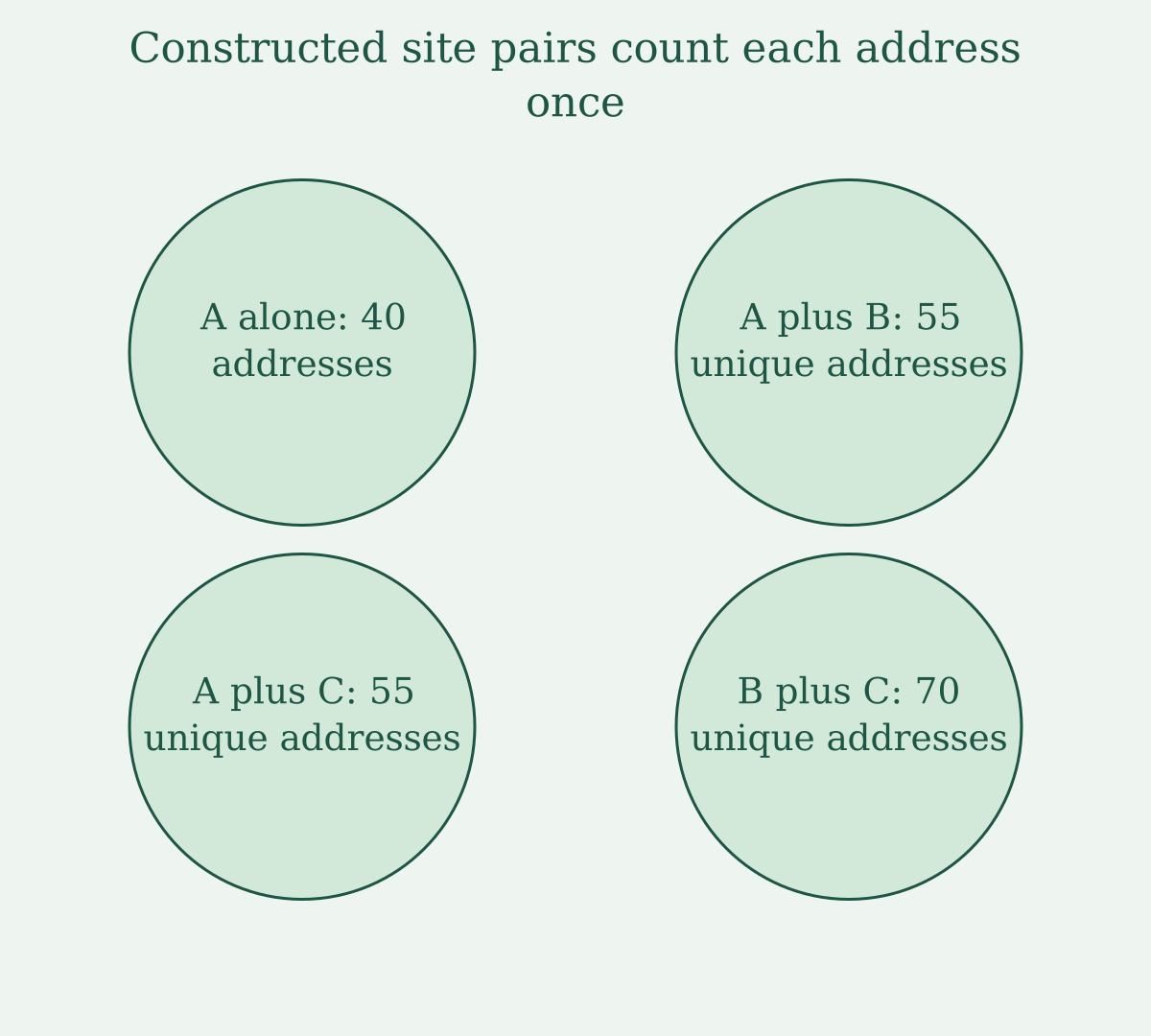
The result follows from the question being asked. Adding the two standalone totals would double-count destinations in an overlap. Comparing complete pairs instead preserves the union of their eligible address lists. The strongest individual site need not belong to the strongest pair because the second site’s contribution depends on what the first already covers. This does not make overlap worthless. It makes additional reach a relationship between a candidate and a specified existing or proposed network.
Redundancy is a different objective. Addresses reachable from two sites might have another option during an interruption, but dependable backup would require evidence about spare capacity and transferable work. Similarly, an eligible address is not an order, a unique person or a simultaneous delivery. Demand weights, locker availability, machine capacity and customer choices all sit outside the simple count. Adding them would require a revised model rather than a more ambitious label for the same result.
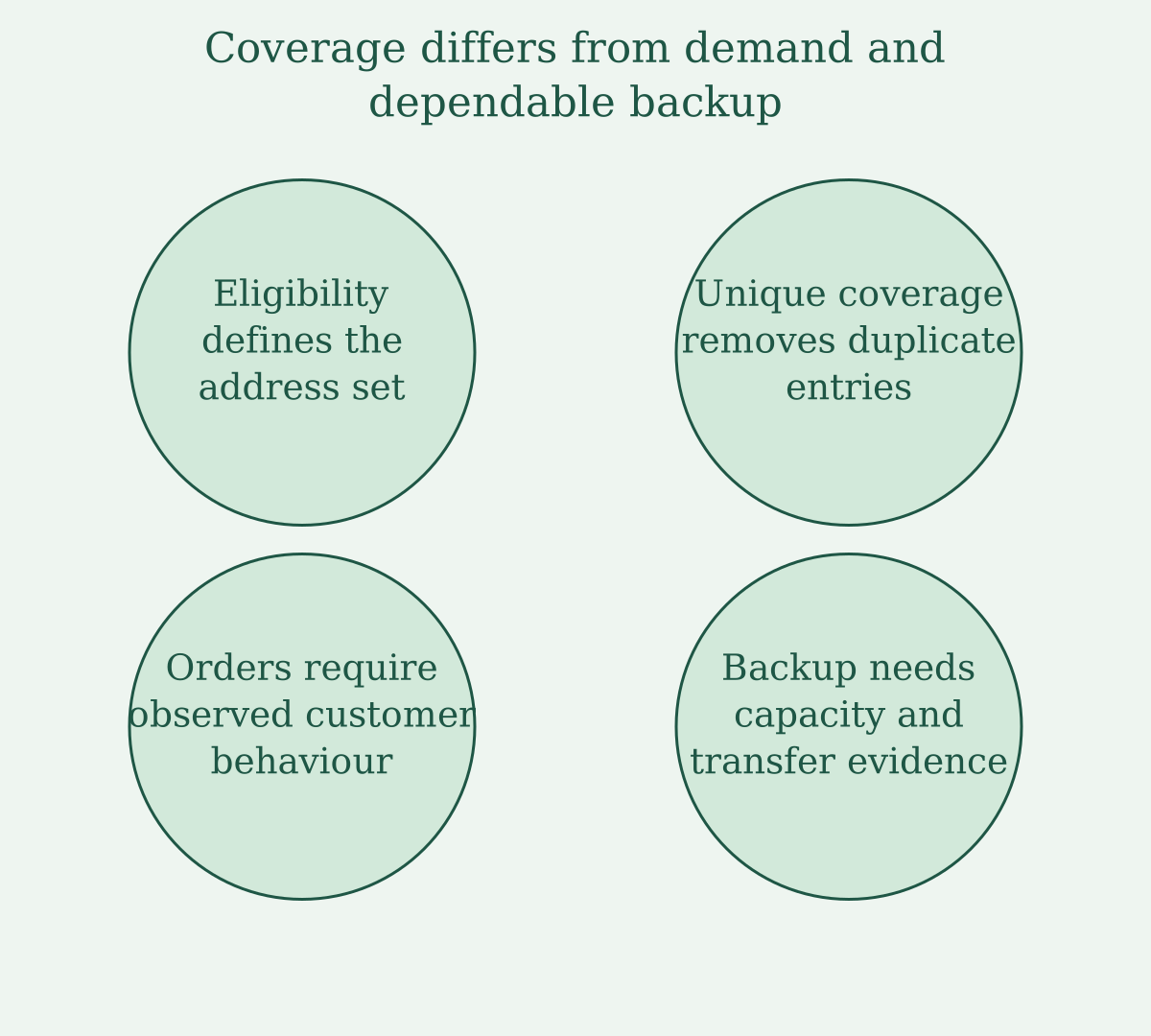
The source recommends consistent units, eligibility rules, identifiers and reference dates before comparing sites. Two spellings of one destination should not create false additional coverage, while a radius estimate should not be mixed casually with a practically tested service area. Real costs or mandatory locations would also change which combinations are feasible. The long read’s useful contribution is to match the ranking method to the decision: count what a site adds to a named network and compare complete feasible combinations when the choice concerns a combination.