Webpage checker · nineinchnews.com
Package identifiers: readability, records and page analysis
Visit nineinchnews.comRead the original long read ↗
Separating a returned value from a checked package association and the contents of its product record.
Live HTML checked 16 October 2026 · HTTP 200 · English long read
HTML inspection
Page characteristics
Observed from the fetched public HTML. Counts cover the whole document unless labelled otherwise; article word count includes text within the first article element. These are page characteristics, not a ranking or performance score.
| HTTP status | 200 |
|---|---|
| Final response URL | https://nineinchnews.com/stories/building-material-label-readability-record-link-2025/ |
| Title tag | A readable package identifier still needs the right record · Nine Inch News |
| Title length | 75 characters |
| Meta description | A proposed extension of a building-material marking trial raises a data question: how can a readable package identifier be distinguished from a correctly linked product record? |
| Description length | 176 characters |
| HTML language | en |
| Canonical URL | https://nineinchnews.com/stories/building-material-label-readability-record-link-2025/ |
| Meta robots | index,follow |
| Viewport | width=device-width,initial-scale=1 |
| Heading counts | H1: 1 · H2: 16 · H3: 6 · H4: 0 · H5: 0 · H6: 0 |
| H1 text | A readable package identifier still needs the right record |
| Article element word count | 2,371 words |
| Whole-page image elements | 21 |
| Images with non-empty alt text | 21 |
| Whole-page links | 46 |
| External link elements | 14 |
| Response HTML size | 34,767 bytes (UTF-8 snapshot) |

Article overview
A package identifier can be readable while its relationship to the package or product record remains unresolved. Nine Inch News examines this distinction through January 2025 reporting on a ministry proposal to extend a Russian building-material marking trial until August 31. The attributed reason involved further examination of identifier application and information-system interaction. The source preserves that proposal as intended work rather than confirmation of an adopted extension or completed technical result. Its analysis concerns evidence definitions and data quality, without interpreting marking obligations or prescribing a compliance process.
The first stage asks whether a particular reading attempt returned an identifier under stated conditions. A second asks whether that value agrees with the expected identifier for the presented package. A third examines the associated product record and the unit it describes. Success at one stage does not establish the next. In an invented example, a readable value from package A belongs to package B in the selected reference set. The disagreement identifies a question to investigate, not a confirmed cause attributable to the carrier, the system or either package.
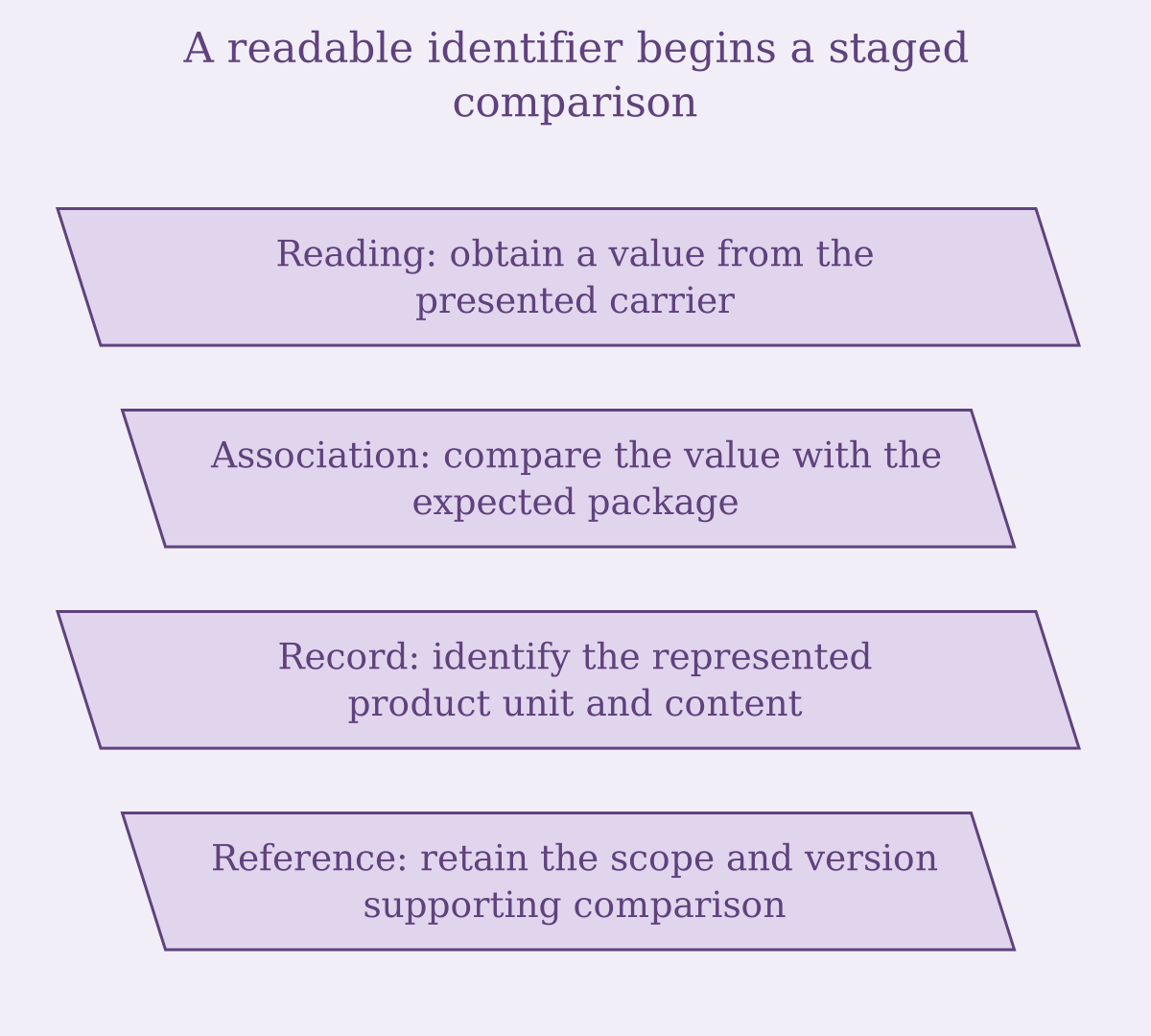
Reference scope and version remain part of the comparison. Linking an identifier to a record is different from checking that record’s contents against the intended object. Revising the reference later should not silently rewrite what supported an earlier observation. The account also distinguishes attempts from unique packages. Its fictional hundred-package example includes retries, yielding different percentages for successful attempts and eventual package coverage. Both calculations can be correct while answering different questions. A repeated transmission of one observation is another separate event and cannot independently create another observed reading.
Missing evidence and contradictory evidence require different statuses. Without a reference, a readable identifier has no checked association; with a disagreeing reference, the comparison has exposed a discrepancy. Neither state alone proves a defective product. Another hypothetical sample separates readable values, matching associations, disagreements and unavailable references, retaining the original denominator at each stage. Those categories are explanatory constructions rather than official platform statuses or real trial results. A useful summary can remain concise while showing how many objects reached each evidential boundary.
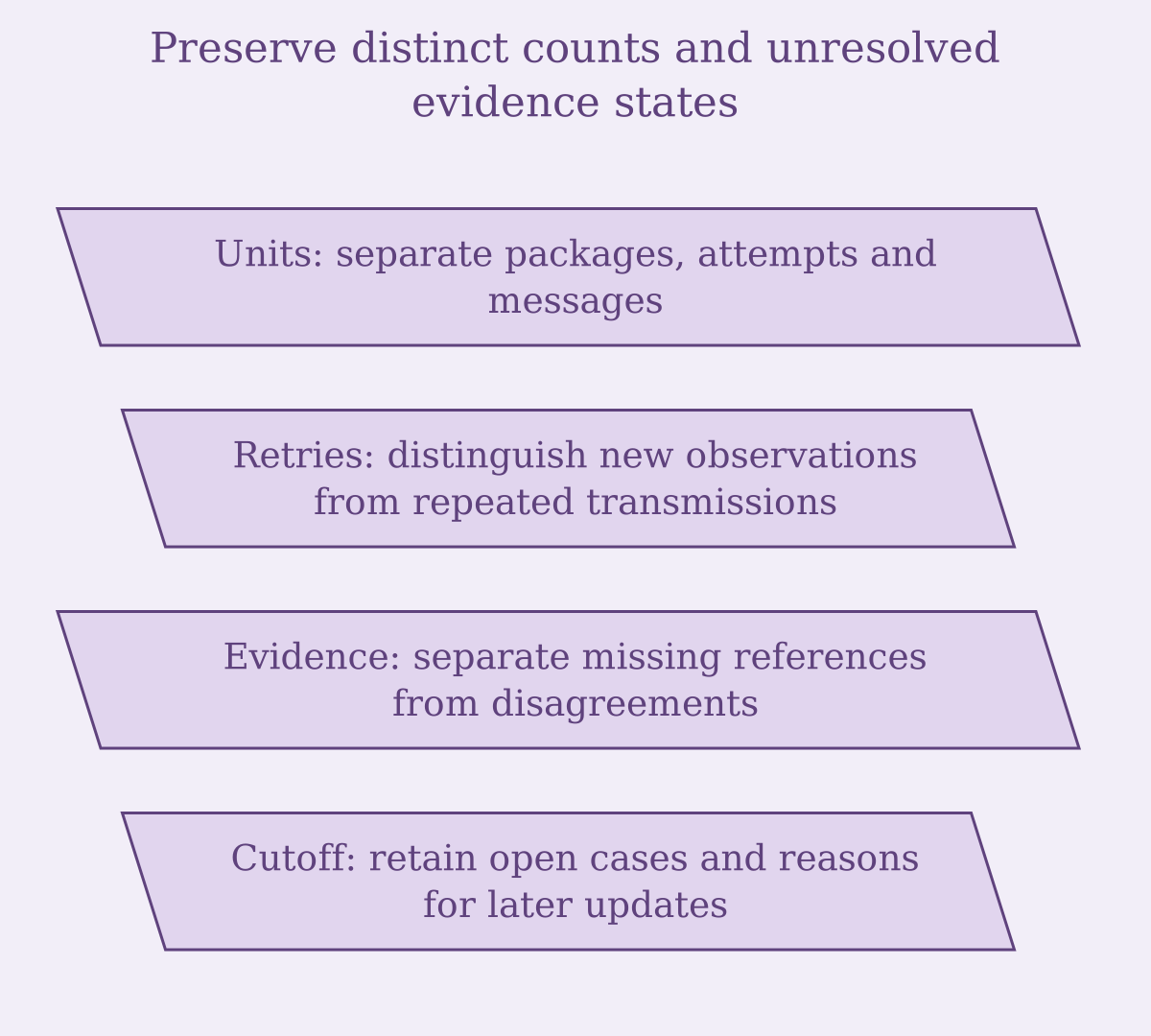
The article extends the same discipline to unresolved investigations. First observation, availability of supporting records and eventual explanation may occur at different times. Cases still open at a cutoff should remain visible instead of being assigned invented outcomes or disappearing behind completed-case totals. A longer trial creates an opportunity for further observations, not an operating result by itself. The contribution is a reproducible chain connecting the package, reading event, expected association and reference version. That lets a later report state exactly what was demonstrated while reserving broader product-history or independent-verification claims for evidence capable of supporting them.