Webpage checker · northstareconomics.com
Customs traceability: shared data, border systems and page analysis
Visit northstareconomics.comRead the original long read ↗
How common information supports distinct border controls without making implementation indicators equivalent to shipment outcomes.
Live HTML checked 16 October 2026 · HTTP 200 · English long read
HTML inspection
Page characteristics
Observed from the fetched public HTML. Counts cover the whole document unless labelled otherwise; article word count includes text within the first article element. These are page characteristics, not a ranking or performance score.
| HTTP status | 200 |
|---|---|
| Final response URL | https://northstareconomics.com/perspectives/customs-traceability-border-data-2026/ |
| Title tag | Customs traceability and border data | Northstar Economics |
| Title length | 58 characters |
| Meta description | Border procedures connect customs, certificates and supply-chain records. |
| Description length | 73 characters |
| HTML language | en |
| Canonical URL | https://northstareconomics.com/perspectives/customs-traceability-border-data-2026/ |
| Meta robots | index,follow |
| Viewport | width=device-width,initial-scale=1 |
| Heading counts | H1: 1 · H2: 11 · H3: 10 · H4: 0 · H5: 0 · H6: 0 |
| H1 text | Customs traceability and border data |
| Article element word count | 2,594 words |
| Whole-page image elements | 23 |
| Images with non-empty alt text | 23 |
| Whole-page links | 51 |
| External link elements | 21 |
| Response HTML size | 35,962 bytes (UTF-8 snapshot) |
Article overview
Customs modernization depends on agencies understanding the same information and acting on it consistently. Northstar Economics examines that connection through international rules, shared data definitions and examples of sector systems. Its central distinction is between introducing a procedural measure and observing an operational result. An implementation indicator can establish that a tool exists without showing how quickly an individual consignment cleared. Likewise, a long-term estimate of potential trade gains cannot be read as exports already delivered.
A national single window gives traders one submission point for information needed by participating authorities. The article connects this arrangement with the WTO Trade Facilitation Agreement, whose provisions address risk management and repeated requests for data. A common interface still needs coordination among agencies with different mandates and resources. Harmonized definitions matter because a field sent by one system must carry the meaning expected by another. Legal foundations, organizational responsibilities and technical design therefore develop alongside the platform rather than following automatically from its launch.
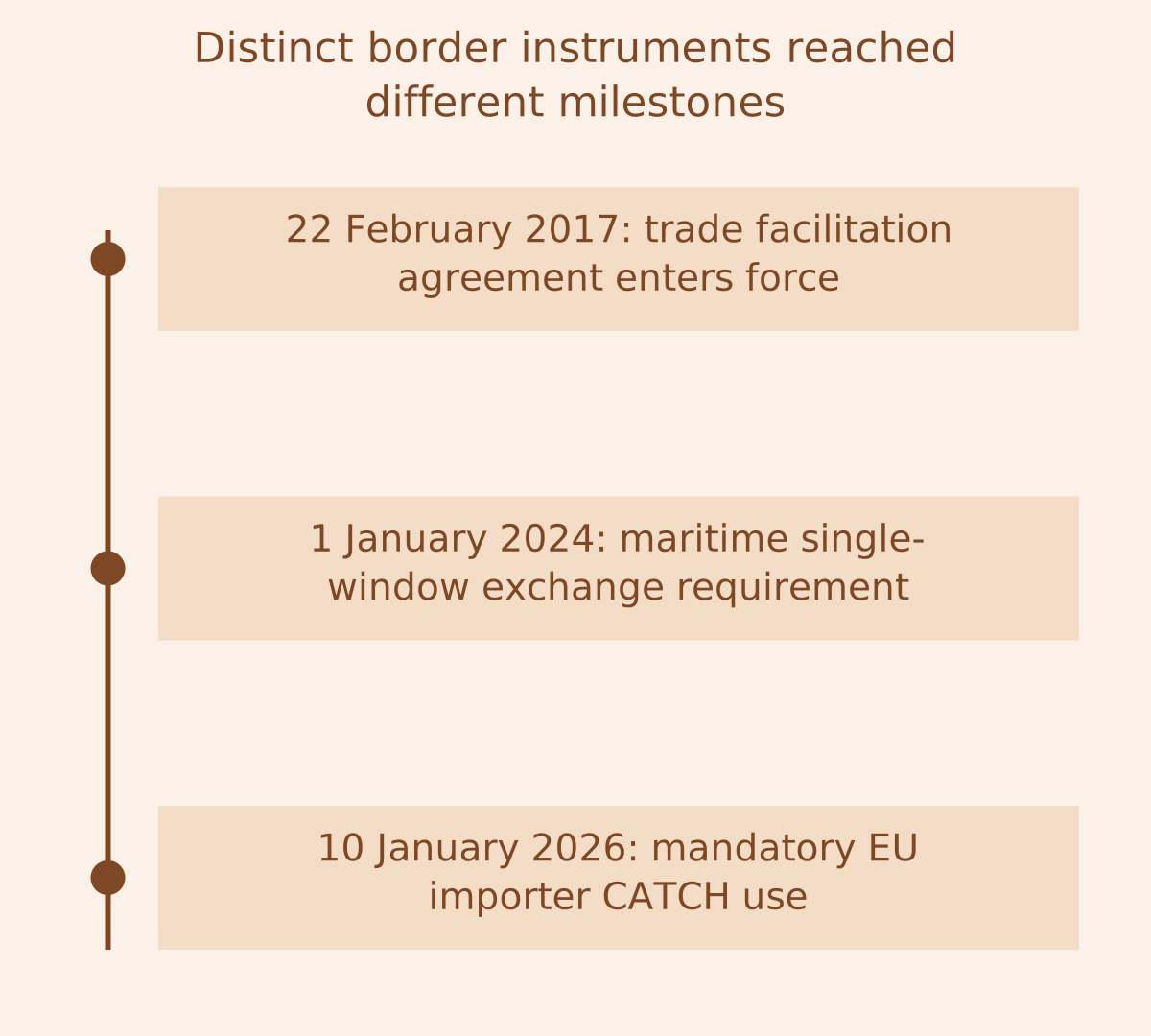
The source traces several dated stages without treating them as one universal rollout. The trade facilitation agreement entered into force on 22 February 2017. Maritime single-window electronic exchange became required under the relevant convention amendments on 1 January 2024. The article reports mandatory EU importer use of CATCH for fishery documents from 10 January 2026. These dates concern different instruments and users; they do not establish that every border agency or port had identical capabilities. A timeline helps distinguish obligations from the practical work needed to apply them.
Cross-border interoperability adds another boundary: information must move between national systems as well as within one administration. The article describes electronic plant certificates and the common message structures supporting their exchange. Business traceability addresses a related but different need by preserving identifiers, locations and events along a supply chain. A certificate, an advance cargo declaration and a product movement record can contribute useful evidence while retaining distinct purposes. Combining them carelessly risks losing the scope and responsibility attached to each record.
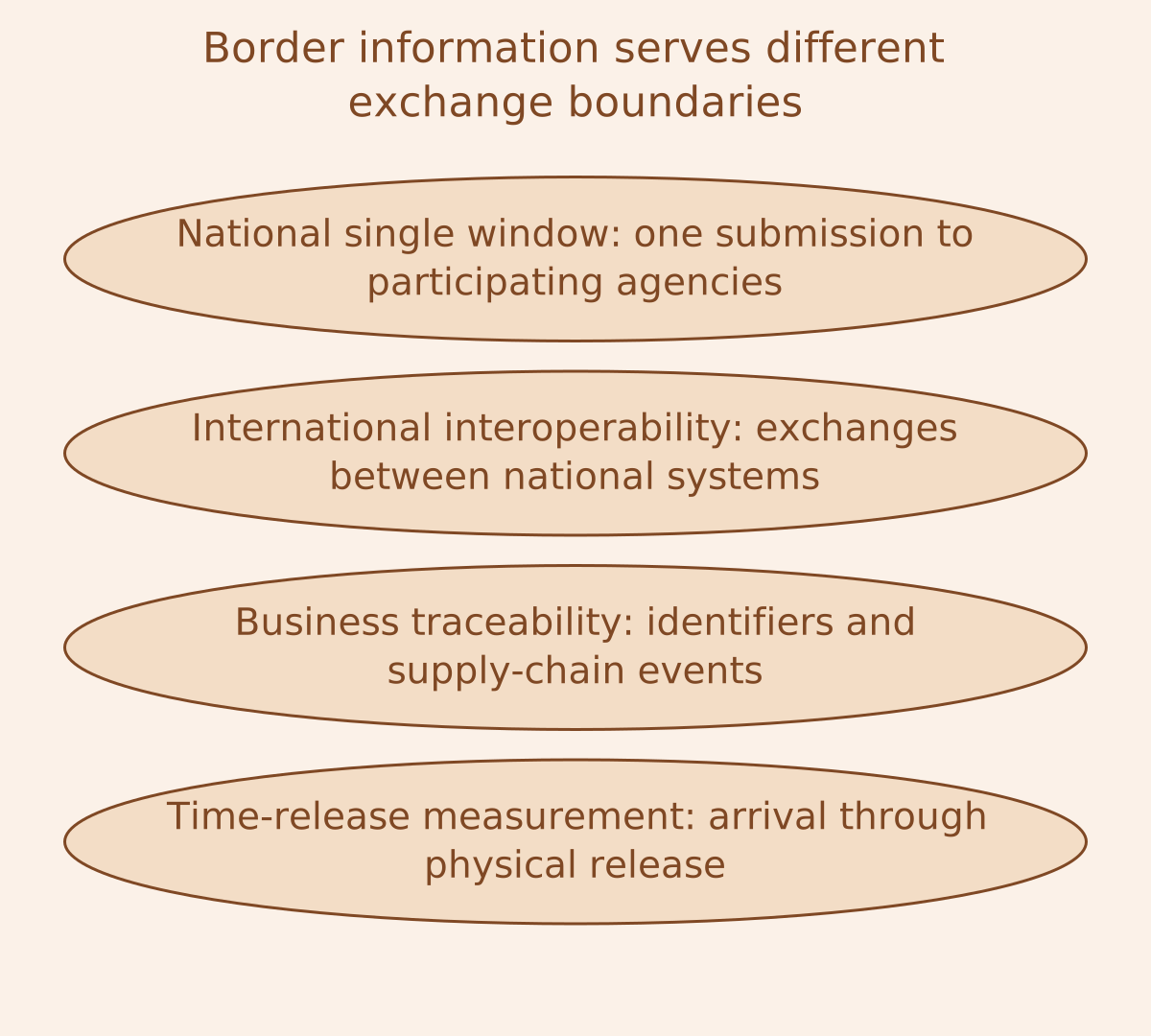
Operational measurement closes the gap between institutional design and shipment experience. The source presents the World Customs Organization’s time-release approach as measuring arrival to physical release, with process mapping, sampling and participation by relevant border agencies. Such evidence can reveal where waiting occurs rather than assuming that digital submission removes every delay. The practical reading is to ask what information is exchanged, which authority uses it, what stage has actually been implemented and which outcome was measured. That sequence supports a more precise assessment of border reform than counting digital platforms alone.