Webpage checker · stateandlocal.org
Exhibition floor reuse: changeovers and page analysis
Visit stateandlocal.orgRead the original long read ↗
Connecting material area, repeated coverage and condition review across successive event bookings.
Live HTML checked 16 October 2026 · HTTP 200 · English long read
HTML inspection
Page characteristics
Observed from the fetched public HTML. Counts cover the whole document unless labelled otherwise; article word count includes text within the first article element. These are page characteristics, not a ranking or performance score.
| HTTP status | 200 |
|---|---|
| Final response URL | https://stateandlocal.org/briefings/exhibition-flooring-between-events-2026/ |
| Title tag | Exhibition Floors That Serve More Than One Event | State & Local |
| Title length | 64 characters |
| Meta description | Keeping a floor in use across events takes planning beyond opening day. Layouts, condition checks and changeover arrangements shape the next use. |
| Description length | 145 characters |
| HTML language | en |
| Canonical URL | https://stateandlocal.org/briefings/exhibition-flooring-between-events-2026/ |
| Meta robots | Not declared |
| Viewport | width=device-width,initial-scale=1 |
| Heading counts | H1: 1 · H2: 14 · H3: 8 · H4: 0 · H5: 0 · H6: 0 |
| H1 text | Exhibition Floors That Serve More Than One Event |
| Article element word count | 2,693 words |
| Whole-page image elements | 23 |
| Images with non-empty alt text | 23 |
| Whole-page links | 38 |
| External link elements | 14 |
| Response HTML size | 32,587 bytes (UTF-8 snapshot) |
Article overview
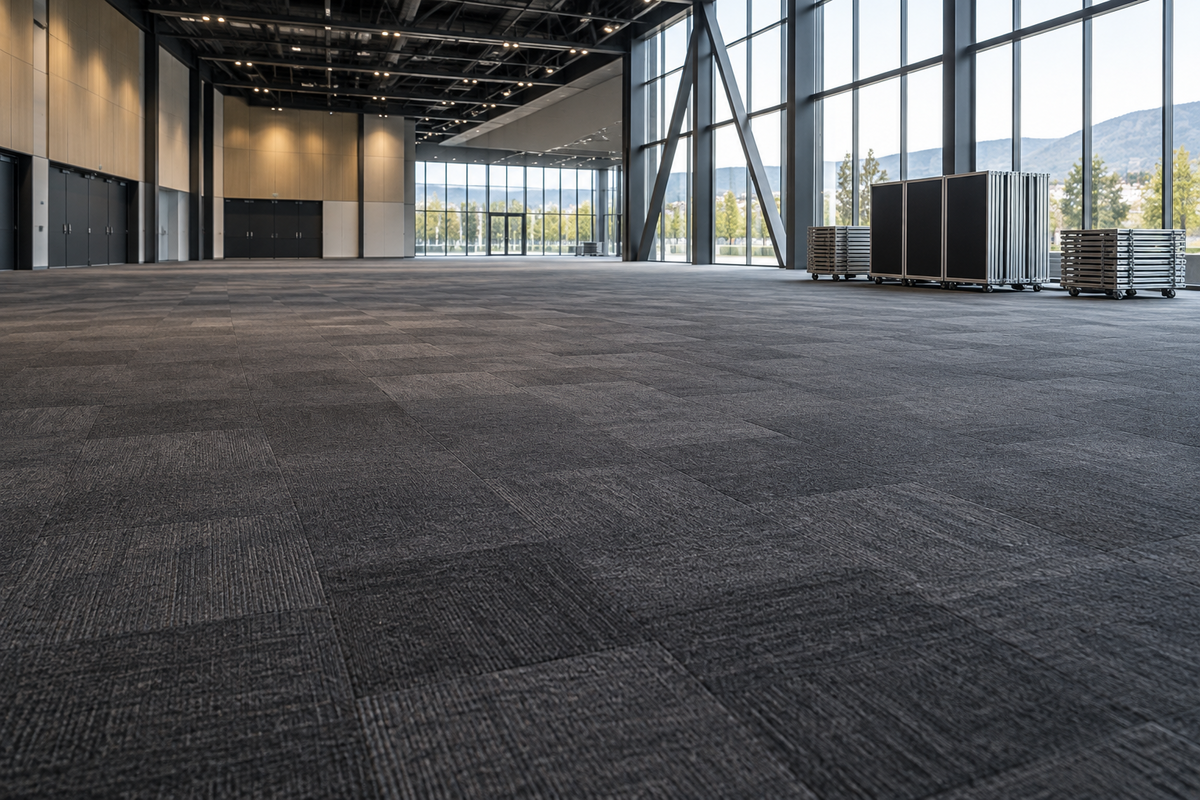
An exhibition floor needs to serve a sequence of bookings rather than only one opening day. State and Local examines that operational question through February reporting on installed exhibition carpeting at Te Pae Christchurch in New Zealand. The source uses the example to explore repeated service without assuming that every venue, material or event has identical requirements. Its focus is the arrangement around the surface: what is already supplied, what the organiser needs changed and which responsibilities connect the end of one booking to the next confirmed use.
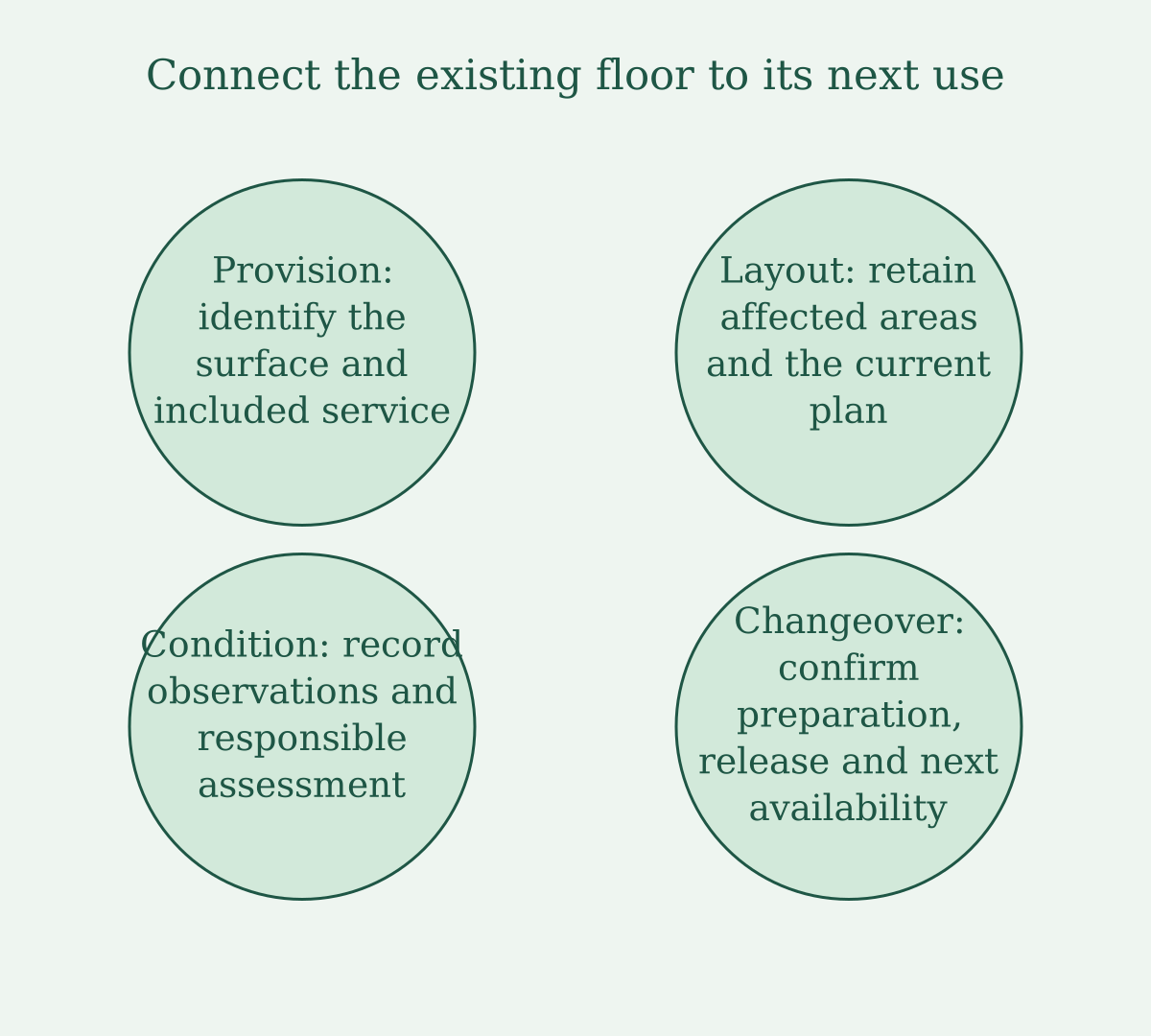
The starting account should identify the existing finish, ownership, permitted changes and return condition. Permanent and temporary labels alone do not establish reuse, maintenance or destination. An organiser using the venue’s finish, bringing a reusable overlay or purchasing a covering for one event buys different arrangements. Comparisons need equivalent scope across supply, delivery, installation, removal and preparation. Layout boundaries and versions matter too: a limited display requirement should not automatically become a request to replace the entire hall surface. Appearance preferences and functional needs require different questions rather than interchangeable justifications.
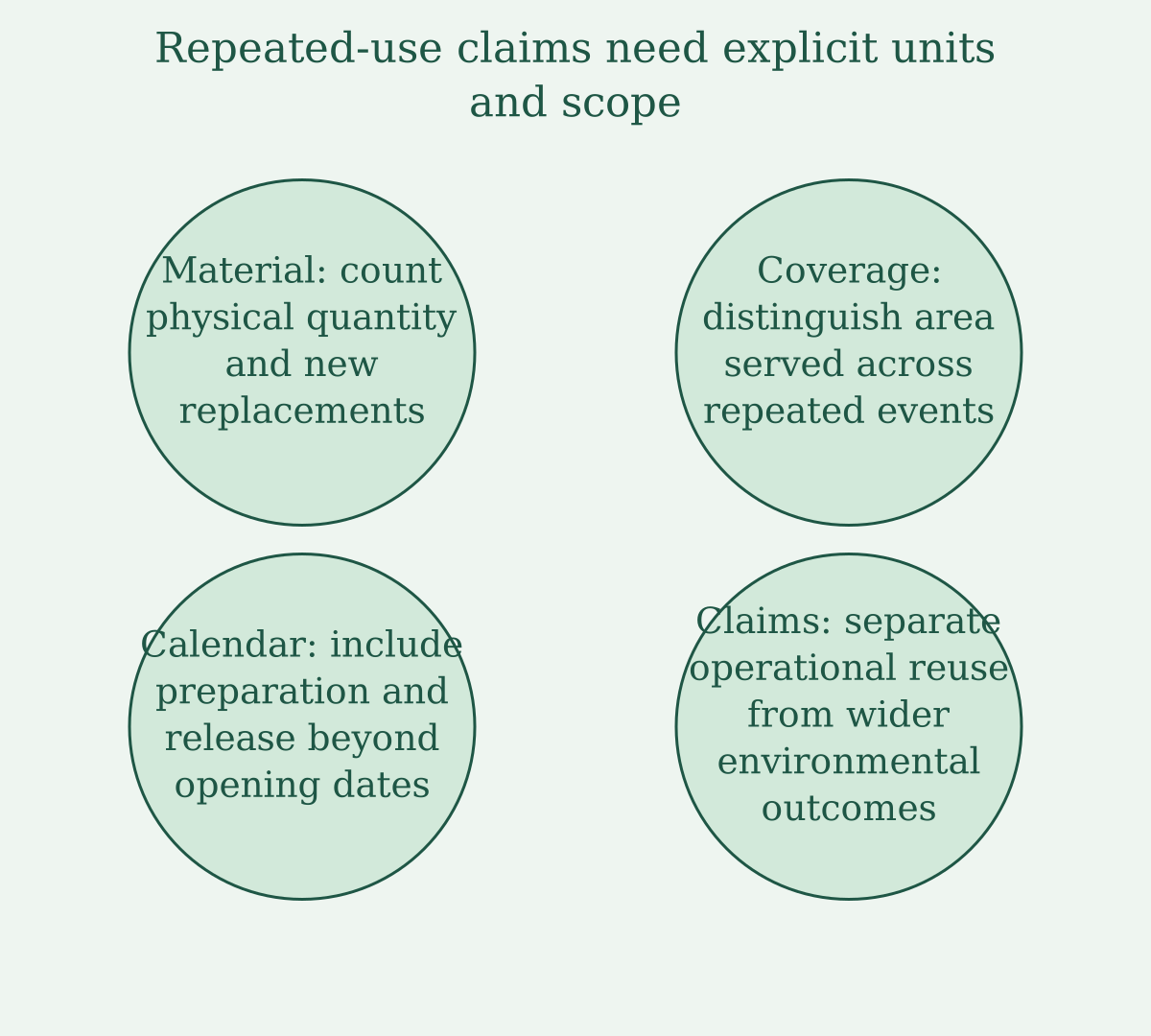
The article separates physical material area from coverage supplied across several uses. Its hypothetical example uses the same 600 square metres at three events, producing 1,800 square metres of repeated coverage rather than that quantity of stored material. Adding a forty-square-metre replacement before the third event makes newly supplied material 640 square metres while coverage remains unchanged. These are invented quantities, not measurements from the named venue. The arithmetic does not calculate waste mass, emissions or cost because transport, preparation, material composition and other required inputs remain outside the example.
Repeated use also depends on condition review and time. The record needs an identifiable area, current plan, observed condition and responsible decision before availability is confirmed. Finding an issue after an event does not independently establish its cause. Public opening dates likewise omit preparation, removal and release intervals that can overlap between bookings. Stock physically present may already be reserved or awaiting assessment. Proposed alternatives therefore need their own confirmed quantity, timing and suitability rather than appearing as an automatic solution when an earlier return is delayed.
The final planning steps connect the approved layout, flooring description and supplier offer before an order proceeds. Samples establish appearance within a defined proposal, not blanket permission for every application. Changes need a current shared version that supersedes earlier instructions and preserves any unresolved condition. Reviews across bookings should retain comparable areas and service periods before attributing differences to better management. The article’s contribution is a concrete account of retained material, replacement and changeover work. That supports an honest repeated-use statement while leaving broader environmental claims to an appropriate comparison beyond the operational record.