Webpage checker · todayuktimes.com
ECB easing and growth: monetary transmission and page analysis
Visit todayuktimes.comRead the original long read ↗
Why cheaper finance and a stronger investment response remain different economic questions.
Live HTML checked 16 October 2026 · HTTP 200 · English long read
HTML inspection
Page characteristics
Observed from the fetched public HTML. Counts cover the whole document unless labelled otherwise; article word count includes text within the first article element. These are page characteristics, not a ranking or performance score.
| HTTP status | 200 |
|---|---|
| Final response URL | https://todayuktimes.com/analysis/eurozone-easing-cycle-impact-2026/ |
| Title tag | From 4% to 2%: What Two Years of ECB Rate Cuts Have Done for the Eurozone — and What They Have Not — Today UK Times |
| Title length | 115 characters |
| Meta description | Between June 2024 and June 2025 the European Central Bank cut its deposit rate eight times, from a record 4% to 2%, as inflation fell from 2.6% to below target. Yet eurozone growth remained anaemic — 0.8% in 2024, a forecast 0.9% in 2025 — with Germany on the brink of recession and US tariffs adding new headwinds. Defence spending promises a medium-term offset, but the easing cycle has exposed the limits of monetary policy alone in an economy constrained by structural divergence, weak investment and demographic decline. |
| Description length | 525 characters |
| HTML language | en |
| Canonical URL | https://todayuktimes.com/analysis/eurozone-easing-cycle-impact-2026/ |
| Meta robots | Not declared |
| Viewport | width=device-width, initial-scale=1 |
| Heading counts | H1: 1 · H2: 15 · H3: 6 · H4: 0 · H5: 0 · H6: 0 |
| H1 text | From 4% to 2%: What Two Years of ECB Rate Cuts Have Done for the Eurozone — and What They Have Not |
| Article element word count | 2,271 words |
| Whole-page image elements | 21 |
| Images with non-empty alt text | 21 |
| Whole-page links | 38 |
| External link elements | 12 |
| Response HTML size | 31,995 bytes (UTF-8 snapshot) |

Article overview
Lower interest rates can reduce a financing constraint without resolving every obstacle to economic growth. Today UK Times explores that relationship in its June 2026 analysis of the European Central Bank’s earlier easing cycle. The article describes deposit-rate reductions between June 2024 and June 2025, then asks why cheaper credit did not produce a stronger investment response. Its policy settings, projections and comparisons belong to the historical discussion rather than serving as a current account of eurozone rates.
The most useful distinction is between the cost of capital and the expected return on using it. A business facing weak orders, uncertain export access or expensive energy may decline to expand even when a loan becomes cheaper. The source connects this hesitation with trade uncertainty and industrial difficulties, particularly in Germany. Its argument is that monetary conditions interact with customer demand and productive capability. An aggregate growth figure alone does not reveal which constraint matters for a specific firm.
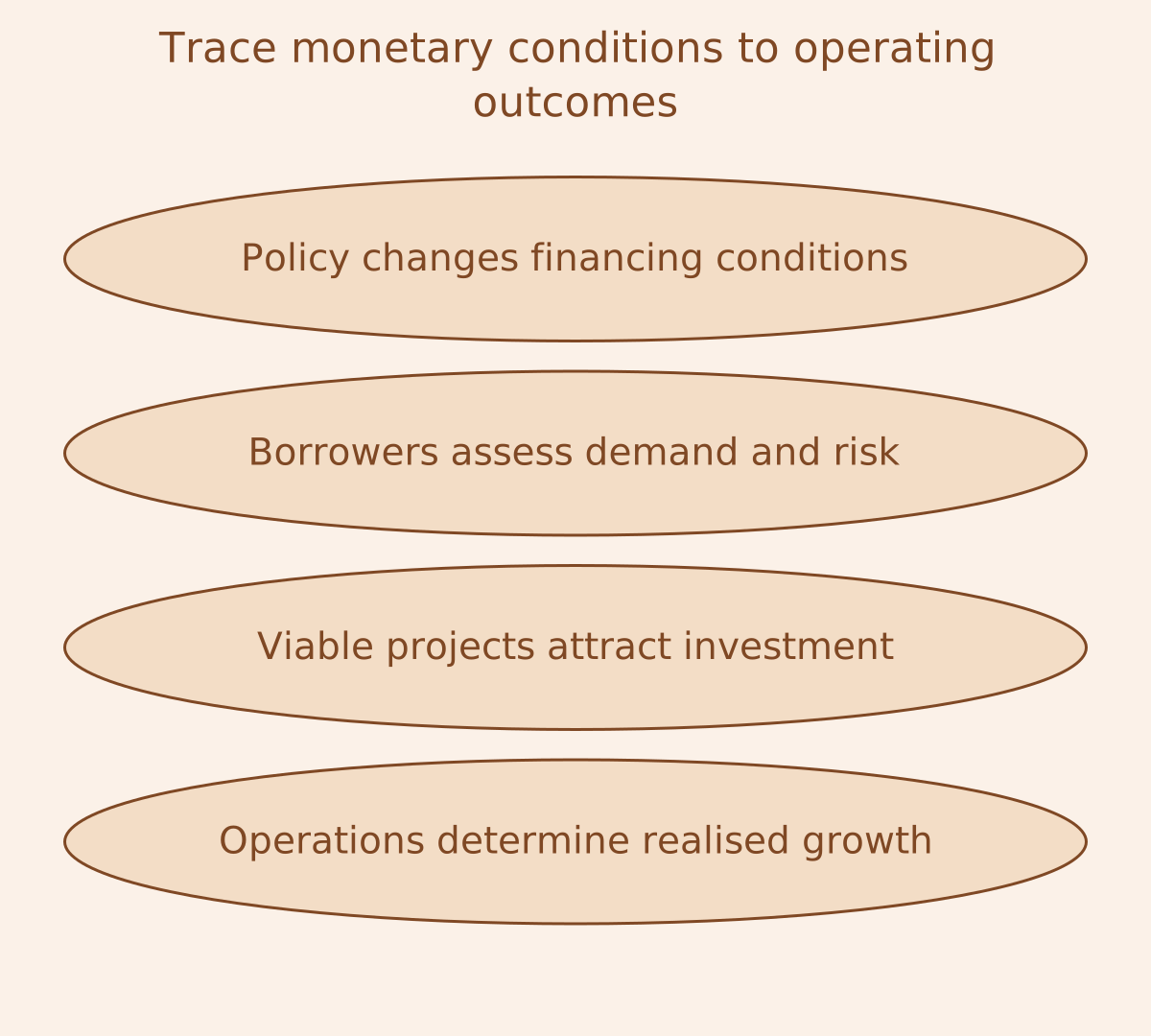
Transmission also depends on borrowers’ willingness and ability to act. Banks can adjust lending terms while households remain cautious about mortgages and businesses postpone equipment purchases. Fiscal consolidation may offset some support to demand, while public investment can create another impulse over a different timetable. The article discusses defence and infrastructure spending as potential sources of activity, but an announced envelope is different from completed procurement, domestic production or realised output. Timing and the location of spending affect how those plans reach the wider economy.
A single policy rate also serves economies with different structures. Manufacturing exposure, services demand, energy use and demographic conditions vary across the monetary union. This means that a common change can reach firms and households unevenly. The source uses that divergence to explain why aggregate stabilisation should not be confused with a uniform recovery. It also distinguishes headline inflation from services prices and wages, which can move differently and complicate interpretation of the monetary stance.
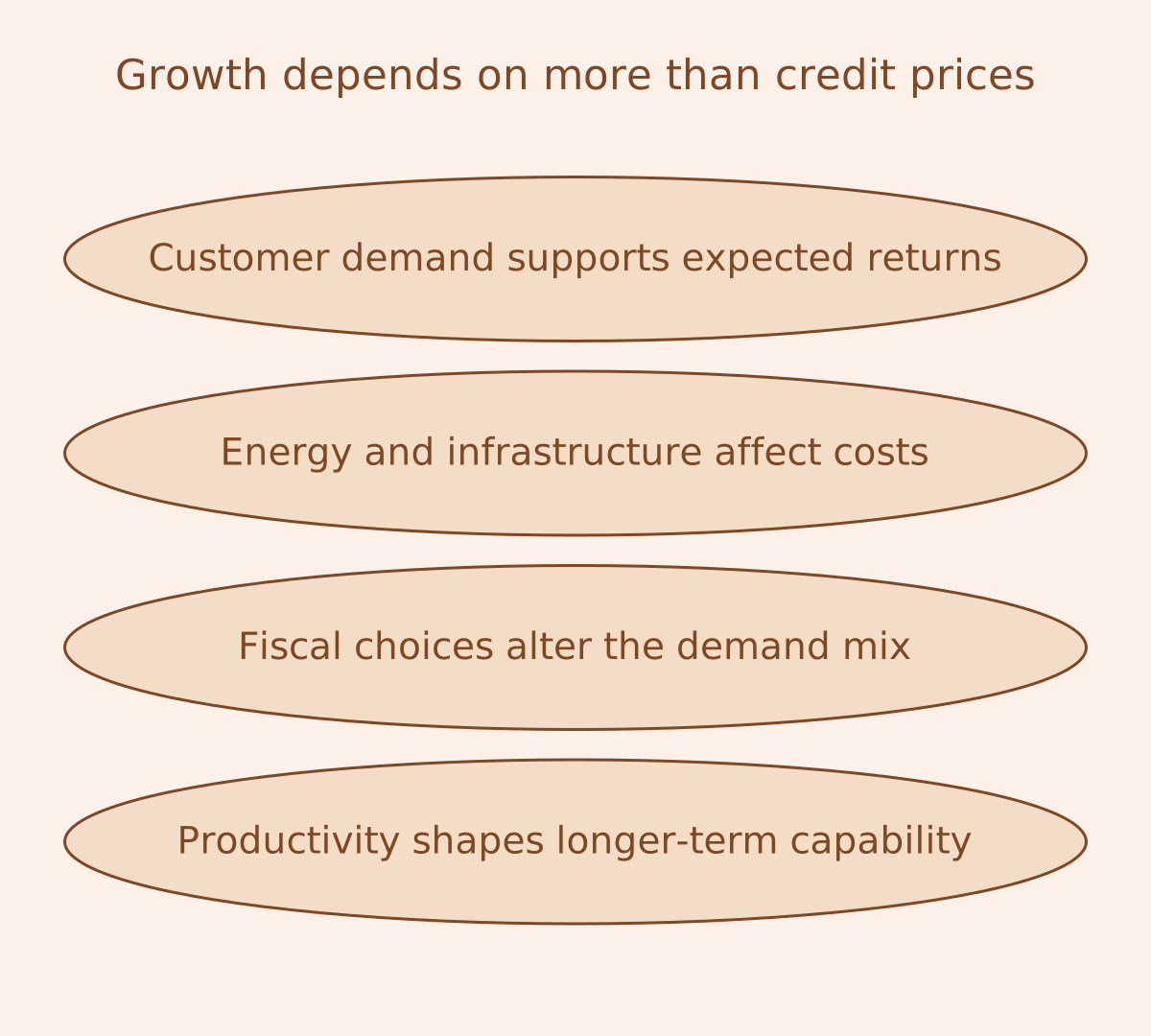
Some numerical and chronological statements in the source are inconsistent with one another, so this summary does not reconstruct a precise rate-by-rate or inflation timeline from them. Instead, it preserves the long read’s qualitative proposition: easing can provide time and reduce pressure, while infrastructure, productivity, fiscal choices and viable private projects determine other parts of growth. The relevant assessment follows the chain from financing conditions through borrowing and investment to operating results. That framework is more informative than treating either a cut or a weak GDP reading as complete proof that monetary policy succeeded or failed.